


Here’s how to Barbell Row with proper form:
- Stand with your mid-foot under the bar (medium stance)
- Bend over and grab the bar (palms down, medium-grip)
- Unlock your knees while keeping your hips high
- Lift your chest and straighten your back
- Pull the bar against your lower chest
Return the bar to the floor. Breathe. Straighten your back, take a big breath, hold it. Then do your next rep. Barbell Row five sets of five every StrongLifts 5×5 workout A.
Barbell Rows are a full body, compound exercise. They work your upper-back, lower back, hips and arms. They build a stronger, muscular back and bigger biceps. Barbell Rows are one of the most effective assistance exercises you can do to increase your Squat, Bench Press and Deadlift.
To avoid back pain, keep your lower back neutral. Don’t let it round or you’ll squeeze your spinal discs. Don’t hold the bar in the air between reps or your back will tire and round. Rest the bar on the floor between reps. Set your lower back neutral before you Barbell Row the next rep.
Barbell Rows are easy to cheat. You can lift heavier weights by using your hips. But your upper-back should do most of the work. If your torso rises too far above horizontal, the weight is too heavy. Lower it to work your upper-back mostly, not your hips. Barbell Rows aren’t Deadlifts.
This is the definitive guide to proper form on the Barbell Row.
Contents
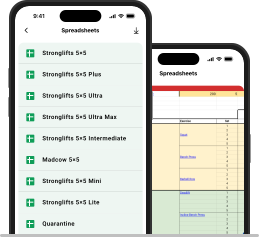
Join the Stronglifts community to get free access to all the spreadsheets for every Stronglifts program. You’ll also get 15% off Stronglifts Pro, and daily email tips. Enter your email below to sign up today for free.
Introduction
How to Barbell Row

The Barbell Row starts with the bar on the floor. And the bar returns to the floor on every rep. You don’t keep the bar in the air between reps (those are Yates Rows). You pull from the floor so you can set your lower back neutral, breathe and use your hip muscles. Proper form on Barbell Rows is similar to Deadlifts: each rep starts and ends on the floor. Here’s how to Barbell Row with proper form in five simple steps…
- Walk to the bar. Stand with your mid-foot under the bar. Don’t touch it with your shins. Medium stance, toes pointing out.
- Grab the bar. Use a medium grip width. Narrower than on Bench Press, wider than on Deadlifts. Hold the bar low in your hands.
- Unlock your knees. Keep your hips higher than on the Deadlift. Bend your knees but keep them back so the bar can’t hit them.
- Lift your chest. Straighten your back. Don’t move the bar. Don’t drop your hips. Don’t squeeze your shoulder-blades together.
- Row. Take a big breath, hold it and pull the bar against your lower chest. Lead with your elbows and pull them to the ceiling.
You can raise your torso at the top to lift heavier weights. But your Barbell Rows can’t turn into Deadlifts. If your torso rises more than 15° above parallel, the weight is too heavy. You’re shortening the range of motion to make it easier. This is like turning Squats into half Squats. Your upper-back works less which turns Barbell Rows into an ineffective strength and muscle builder. Lower the weight to keep your torso down.
Barbell Row Form 101

Your build determines how your Barbell Row form should look like for maximum effectiveness. People with shorter arms must usually grip the bar narrower than people with long arms like me. Don’t mimic the Barbell Row technique of someone else unless you both have the same build. Follow these general Barbell Row guidelines instead, then tweak them as you gain experience…
- Bar Path. Vertical line from your mid-foot to your lower chest
- Barbell. On the floor, over your mid-foot, at the start of each rep
- Stance. Medium, wider than on Deadlifts but narrower than on Squats
- Feet. Whole foot flat on the floor, turn you toes about 30° out to the side
- Knees. Unlocked, back and pushed out to the side so the bar can’t hit them
- Grip. Full grip. Both palms face you. Bar rests low in your hands. Squeeze the bar
- Grip Width. Medium, narrower than on the Bench Press, wider than on Deadlifts
- Wrists. Keep them straight to avoid wrist pain, use a full grip and squeeze the bar
- Elbows. Locked elbows at the bottom, pull them to the ceiling and behind your torso
- Chest. Raise it at the bottom before you pull the weight to avoid lower back rounding
- Shoulders. In front of the bar at the bottom when viewed from the side, let them hang
- Shoulder-blades. Over the bar and your mid-foot at the bottom, squeeze them at the top
- Head. Neutral, inline with the rest of your spine. Don’t look up, don’t look at your feet
- Torso. Horizontal with the floor at the bottom, raise it on the way up but not more than 15°
- Lower back. Neutral, natural arch like when you stand. No rounding or excess arch ever
- Hips. Higher than on the Deadlift, not too low or the bar will hit your knees and shins
- Setup. Bar over mid-foot, shoulder-blades over bar, hips high, bent knees, back neutral
- Breathing. Take a big breath at the bottom, hold it at the top, exhale/inhale at bottom
- Way up. Pull your elbows to the ceiling, keep your knees back, raise your torso 15° max
- Top. Bar against lower chest, elbows behind torso, torso slightly above horizontal
- Between reps. Bar on the floor, don’t bounce, rest a second, get tight, pull again
- Way down. Lower the bar fast but under control, keep your knees back
Muscles Worked
The Barbell Row works mostly muscles that you don’t see. When you stand in front of the mirror in the morning, the first thing you see is you chest, arms and abs. That’s why most people focus on these muscles while ignoring their back and legs. It’s also what leads to imbalanced, funny-looking physiques. A big chest with no back is weird. Train Barbell Rows hard so you look great even when you turn around. You’ll work these muscles:
- Upper-back. You must pull your shoulder-blades back at the top to get the bar to your chest. This works your broadest back muscle that give you a v-shape: your lats ((latisimus dorsi). It also works your traps, rear shoulders and all the small muscles of your upper-back.
- Lower back. Your lower spine must stay neutral when you Barbell Row to avoid disc injuries. Gravity tries to bend your back by pulling the bar down. Resisting this force strengthens the muscles along your spine: your erectors. They protect your spine against injuries.
- Abs. Your ab muscles support your lower back to keep your spine neutral when you Barbell Row. This strengthens the “six pack” muscles that run over your belly, the rectus abdominis. Strengthening a muscle increases its mass. And if you eat right, it becomes visible.
- Hips. Your hamstring and glute muscles work when you raise your torso to get the bar moving off the floor. But they also work to keep your lower back neutral. Barbell Rows strengthen your hip muscles using dynamic and static contractions (with and without movement).
- Arms. Your forearm muscles work to hold the bar in your hands when you Barbell Row. Your biceps work to bend your elbow and lift the weight. Your triceps works to bring your upper-arm behind your torso (the long head is attached to your shoulder-blade).
Barbell Rows are more than a lat exercise. You don’t need to hit your back from every angle like a bodybuilder with pulldowns, pullovers, shrugs, rear raises, hyper-extensions, etc. This takes too much time. It doesn’t strengthen your body as one piece. And it keeps the weight low by isolating your muscles. Barbell Rows and Deadlifts are more effective to build strength and muscle mass. They train your whole back with heavier weights.
Lower Back Safety

Barbell Rows will strengthen your back if you use proper form. But they’ll hurt your lower back if you do them with bad form. Don’t Barbell Row with your lower back rounded. Don’t over-arch it either by hyper-extending your lower spine. Both squeeze your spinal discs and can cause lower back injuries like herniated discs. Keep your lower back neutral. Barbell Row with a natural arch like when you stand and you’ll be safe.
What about the “shear force”? Keeping your torso horizontal while you Barbell Row does apply force in opposite directions on your spine. There’s upward force on one part, downward on the other. This shear force is why people will tell you to raise your torso and do Yates Rows instead. Their thinking is that shear force during Barbell Rows can cause vertical sliding of your spinal discs. A bad lower back injury…
But anyone who has done heavy Barbell Rows knows no sliding of your discs ever takes place. Your trunk muscles contract when you Barbell Row. This contraction locks your spine in position. It protects it against shear. If your trunk muscles aren’t strong enough to hold your spine in position, your back bends. Rounding your lower back during rows is bad, you shouldn’t do it. But the point is no sliding of your discs happens.
In fact, in Anatomy Without a Scalpel Dr Lon Kilgore Phd wrote that it takes 336lb of pressure for the spinal discs of a cadaver to slide. The people concerned about shear force are unlikely to Barbell Row weights that heavy. But let’s say you can. It will take even more pressure for your discs to slide. Because you can contract your trunk muscles to protect your spine more. The cadaver can’t because it’s dead.
Stress has gotten a bad reputation. It’s common nowadays to avoid anything “stressful”. It’s also why so many people are weak. What you don’t use you lose. Shear force is part of every day life and sports. You’ll bend over with high hips at one point, for example when picking up something. And you’re more likely to suffer a lower back injury if you spent your life sparing your spine instead of strengthening it so it can handle shear.
The best way to protect your back against injury is to strengthen the muscles that support it. And to practice keeping your lower back neutral while you lift from the floor. Dumbbell Rows, Inverted Rows, Machine Rows and Pullups don’t train this. These exercises work your upper-back but not your lower back. Only Deadlifts and Barbell Rows do. And if you do them with proper form, you’ll build a strong and healthy lower back.
Barbell Row Videos
Here’s a video where you can see me Barbell Row with proper form as part of the StrongLifts 5×5 Workout A. I’m also answering common questions about the Barbell Row at the same time. Watch from 22:40 for the Barbell Row tips.
Here’s a video of Tom doing Barbell Rows as part of StrongLifts 5×5. His lower back remains neutral. His torso comes up at the top but remains quite horizontal to the floor. His elbows come higher than his torso when the bar touches his chest. His head stays neutral.
Barbell Row Technique
Stance
Medium Stance. Barbell Row with your heels wider apart than on Deadlifts but narrower than on Squats. The exact stance depends on your grip (more on this below). The narrower your grip, the narrower your stance must be so your legs don’t push against your arms when you Barbell Row. The wider your grip, the wider your stance can be. Your heels should be wider apart than your hips, but narrower than your shoulders.
Feet

Bar over mid-foot. Setup with the bar over your mid-foot like when you Deadlift. This is your balance point. The most effective way to Barbell Row the weight from the floor to your chest is in a vertical line over this balance point. If the bar starts over your forefoot it will pull you forward and out of balance. Or it will move back over your mid-foot and hit your knees. If the bar is too close to your shins, it will scrape your shins.
Feet Flat on The Floor. Your whole foot must stay on the floor when you Barbell Row. You have better balance standing on your whole foot than on your toes or heels. Better balance is better bar control and better technique. This improves effectiveness so you can Barbell Row more weight. Don’t let your heels come off the floor or you’ll fall forward. Don’t raise your toes either. Keep your toes, heels and forefoot on the floor.
Toes out 30°. Point your toes in the same direction as your knees. Your knees should point out, to the side, when you Barbell Row. They can’t point forward or you’ll hit your them with the bar. Push your knees out to keep them out of the bar path. Point your toes out as well to make this easier. You’ll stop hitting your knees and shins with the bar when you Barbell Row, especially if you have long thighs like me.
Grip

Full Grip. Wrap your thumbs around the bar. You can squeeze the bar harder when you use the full grip. The harder you squeeze the bar, the less it can move in your hands. Squeezing the bar also contracts your arms and shoulders more. It engages more muscles. It makes the weight easier to Barbell Row. The thumbless grip may help you “feel” the exercise better. But it’s not effective for doing heavy Barbell Rows.
Double Overhand. Grip the bar with both palms facing you (pronated). Don’t grip it with your palms up (supinated). Barbell Rows with your palms facing up works your biceps more. But it does it by putting your wrists and elbows in an awkward position. You can easily get wrist and elbow pain, especially if you grip the bar wide like on the Bench Press but with your palms up. Grip the bar like on Deadlifts, with both palms down.
Hold The Bar Low. Grip the bar close to your fingers, on top of your main calluses. Don’t hold it in the middle of your palm. The skin of your hands will fold between the bar and your fingers. This will hurt and you’ll get bigger calluses that can tear. Hold the bar lower in your hands, close to your fingers. Squeeze the bar so it can’t move. This grip may feel weaker than holding the bar mid-palm. Give it time, you won’t go back.
Straps Are Okay. You cannot Barbell Row with the mixed grip because facing one palm up will irritate your wrist and elbow. Your hands must face down. This means if the weight is too heavy for your grip to hold, your only options are chalk, straps or the hook grip. Few people will Barbell Row weights heavy enough to need this. But if you do, use straps on your heavy sets only. Do your lighter sets without to build grip strength.
Grip Width

Medium Grip. Barbell Row with your grip narrower than on the Bench Press but wider than on the Deadlift. Gripping the bar wider like when you Bench Press makes the weight easier to Barbell Row. A wide grip shortens the range of motion by putting your arms incline. But it also drops your torso and can put it below horizontal to the floor. If you have short arms, a wide grip can cause your lower back to round when you Barbell Row.
Narrow Grip if Your Back Rounds. If your lower back rounds, narrow your grip when you Barbell Row. This puts your arms more vertical to the floor. It raises your torso and keeps it horizontal to the floor. The weight will be harder to Barbell Row because the range of motion is longer. But your back will be safer. Narrow your stance so your legs don’t push against your arms when you pull the weight from the floor.
Wrists

Straight Wrists. Keep your wrists straight when you Barbell Row. Wrap your thumbs around the bar using the full grip. Squeeze it hard until your knuckles turn white. Lock your wrists in position so you have a straight line from your elbows to your wrists to the bar. Don’t let your wrists bend back or they’ll hurt. If your wrists bend, your grip is loose. If it isn’t, the weight is too heavy and you’re cheating by doing T-rex rows.
No T-Rex Rows. One sneaky way to cheat the Barbell Row is to bend your wrists at the top. Instead of using your back muscles to row the weight to your chest, you’re using your wrists. You’re bending them back at the top to get the last few cms/inches of range of motion your back muscles can’t get. This is cheating (and makes you look like a T-rex). Lower the weight and keep your wrists straight before they hurt.
Elbows

Locked At The Bottom. Bending your elbows at the bottom shortens the range of motion. It drops your torso and can cause lower back rounding. It also builds bad habits for Deadlifts where starting each rep with locked elbows is crucial to avoid biceps injuries. Straighten your arms before you Barbell Row the weight. Your elbows won’t hurt as long as you don’t hyper-extend them. Your back will be in a safer position.
Behind Your Torso At The Top. Touch your chest with the bar by pulling your elbows behind your torso at the top. Videotape yourself from the side to check your form. If your elbows don’t come behind your torso, the weight is too heavy. Don’t bend your wrists back to bring the bar to your chest. Don’t drop your chest to meet the bar either. Both are cheating. Lower the weight so you can pull your elbows behind your torso.
Pull with Your Elbows. Barbell Rows aren’t Reverse Curls. The weight is heavier and your arms aren’t strong enough to lift it alone. You must use your stronger back muscles. Don’t try to curl the weight. Setup with straight elbows. Take the slack out of the bar by pulling on it until it touches the top of the plate holes. Lift the bar by bending your elbows and driving them to the ceiling. They must end behind your torso at the top.
Tuck Your Elbows. Keep your elbows 75° in at the top, like when you Bench Press. The exact angle will depend on your build, back angle, grip, etc. But your elbows can’t be perpendicular to your torso. That moves the bar over your forefoot and off-balance. Your elbows can’t touch your torso either because that moves the bar too close to your legs (you’ll hit them). Move the bar over your mid-foot by tucking your elbows.
Torso

Horizontal. Setup for Barbell Rows with your torso horizontal with the floor. You should see a straight line from your head to your hips from the side. That line should be parallel to the floor. If your hips are lower than your chest, you’re bending your legs too much. Straighten your knees to raise your hips. If you chest is lower than your hips, your elbows are bent or your grip is too wide. Fix it to put your torso horizontal.
Raise It 15° Max. Your torso can rise when you Barbell Row. This makes the weight easier to lift by engaging your hip muscles. You can row heavier weights if you move the bar off the floor by opening your hips. Your torso will rise when you do this. As long as it doesn’t rise more than 15° above horizontal, your hips won’t take too much work away from your upper-back muscles. But you’ll work them with heavier weights.
No 45° Back Angles! Raising your torso 45° above horizontal is cheating. It turns your Barbell Rows into Deadlifts by using too much hips. It makes the weight easier to lift by taking work away from your upper-back. Your hips can help you move the bar off the floor. But they can’t do all the work. If you can’t keep your torso from raising more than 15° above horizontal, the weight is too heavy. Lower it so you work your upper-back.
Don’t Be a Purist. You can’t cheat your Barbell Rows by raising your torso 45°. But you can’t try to be strict by keeping it horizontal on every rep. This doesn’t work anyway. Your torso will always rise when you hit your chest with the bar at the top. The only way to keep it horizontal is if you stick with light weights. But light weights don’t strengthen your upper-back. Don’t be a purist. Let your torso rise. Just limit it to 15°.
Lower Back
Lower Back Neutral. The safest way to Barbell Row is with your lower back neutral. This doesn’t mean a flat back. You should have a natural arch in your lower back when you stand. But you shouldn’t over-arch it or let it round. Both squeeze your spinal discs and can cause lower back injuries like herniated discs. Set your lower back neutral before you Barbell Row the weight off the floor. Keep it neutral throughout the lift.
Raise Your Chest. The easiest way to keep your lower back from rounding is to raise your chest. Setup for Barbell Rows and open your chest by lifting it to the ceiling. This will straighten your upper-back and your lower back will follow. If you do it right, you’ll have a straight line from your head to hips. Squeeze your lats (armpits) to lock your chest in position. Then take a big breath and row.
Knees
Unlocked. Setup for Barbell Rows with bent knees. Your legs should be almost straight, straighter than on Deadlifts, with high hips. But your knee joint should be unlocked. The more you bend your legs, the easier to reach the bar and grab it. The less you bend your legs, the more your knees stay back and the less likely you are to hit them with the bar. Unlock your knees but keep your legs as straight as you can.
Knees Out. Don’t Barbell Row with your knees forward or you’ll hit them with the bar. Keep your knees out of the way by pushing them to the side like when you Squat. You can’t do this if your feet point forward. Setup with your toes out 30°. Then push your knees in the same direction as your toes when you Barbell Row. The bar will go up without hitting your knees. Especially if you have long thighs like me.
Don’t Cheat with Your Knees. Don’t straighten your bent knees to get the bar moving off the floor. You can use your hip muscles. And some knee movement is inevitable when you Barbell Row heavier weights. But your upper-back should do most of the work. If your knees straighten when the bar leaves the floor and then rebend at bottom to drop you chest, the weight is too heavy. Lower the weight and do it right.
Hips

High Hips. Setup for Barbell Rows with your hips high. They should be higher than on Deadlifts. The exact height depends on your build and how much you bend your knees. But your torso should be horizontal to the floor so your upper-back muscles do most of the work. And your legs should be almost straight to keep your knees back and out of the way of the bar. Unlock your knees while keeping your hips high.
No Low Hips. Bending over at your hips with straight legs can be challenging if you lack flexibility. You may have to bend your knees more to reach the bar. But keep in mind this puts your knees more forward. You’re more likely to hit them with the bar, especially if you have long thighs bones as I do. Try to keep your hips as high as your flexibility allows. It will improve as you keep doing Barbell Rows.
Don’t Cheat with Your Hips. You can use your hip muscles to Barbell Row heavier weights. You can open them to get the bar more easily off the floor. But your torso can’t rise higher than 15° above horizontal. If it does, the weight is too heavy. Your upper-back must do most of the work, not your hips. These are Barbell Rows, not Deadlifts. Use your hips. But don’t cheat. Lower the weight if your torso rises too far above horizontal.
Chest
Raise Your Chest. Your lower back is less likely to round if you Barbell Row with your chest up. Raise your chest to the ceiling when you setup. Do NOT squeeze your shoulder-blades at the bottom. Squeeze your lats (armpits) instead to lock your chest in position. Your chest will drop between reps. Raise it again before doing your next rep. That’s why you must Barbell Row each rep from the floor: your can use better form.
Hit Your Chest. Pull the bar from the floor against your lower chest. The exact position depends on your build, grip and back angle. But you should move the bar in a vertical line up because that’s the most effective way to Barbell Row. And the bar should start over your mid-foot because that’s your balance point. If it moves in a curve, you’re hitting your chest too high or too low. Or the bar isn’t over your mid-foot at the bottom.
Don’t Hold It At The Top. You don’t have to hold the bar against your torso at the top. You don’t have to squeeze your shoulder-blades and upper-back to “feel” your muscles better. Just pull the bar from the floor fast and slam it against your lower chest. If you do it right, your elbows will end behind your torso at the top. This means your upper-back did their work to Barbell Row the weight from the floor.
Shoulders
In Front of Bar. Setup for Barbell Rows with your shoulders in front of the bar. This keeps your torso horizontal, hips high and knees back. Setting up with your shoulders over the bar doesn’t work. Your hips end too far back which is bad balance. Or your knees are too bent and in the way of the bar. Your shoulders must be in front of the bar like when you Deadlift. But your hips should be higher so your torso stays horizontal.
Head

Head Inline with Torso. Don’t look up when you Barbell Row. This squeezes the spinal discs in your neck and can injure it. Don’t look at your feet either or your back will round. Keep your head inline with the rest of your spine. From the side you should have a straight line from your head to your hips. If this feels weird, keep practicing and be patient. You’ll get used to it and get stronger without hurting your neck.
Avoid Mirrors to Check Form. It’s ineffective and causes bad form. You can’t see your back if you Barbell Row in front of mirrors. And you have to look up which over-archs your neck/back and can hurt them. Even worse is to Barbell Row aside of mirrors and turn your head to check your form. This twists your neck and can hurt it. Videotape yourself to check your form. Face the mirror away to avoid bad form.
Way Up

Pull with Your Elbows. Setup with straight arms and locked elbows. Then pull the bar off the floor by pulling your elbows towards the ceiling. Keep pulling until they end behind your torso at the top. Don’t try to Barbell Row the weight by just bending your arms. They aren’t strong enough to curl the weight. Use your stronger upper-back muscles by leading with your elbows. Pull them back and behind your torso.
Use Your Hips. Open your hip when the bar leaves the floor. Use your stronger hip muscles to get momentum at the bottom. Your knees shouldn’t move, just your hips. If you do this right, your torso will raise above horizontal. It will then stay there while your elbows move back to complete the movement. Don’t be strict by keeping your torso horizontal. Use your hips so you can Barbell Row heavier weights.
Hit Your Lower Chest. The exact position depends on your build and form. But the bar must move vertically over your mid-foot while your torso stays horizontal. Hitting your upper-chest is usually too high. It means the bar started too far forward and your elbows are too far out. It can throw you off balance. Bar to belly usually means you’re raising your torso too much. This takes work away from your upper-back muscles.
Raise your Torso 15° Max. You should raise your torso when you Barbell Row. This allows you to lift heavier weights by engaging your stronger hip muscles. But your torso shouldn’t rise more than 15° above horizontal. If it does, you’re working your hips not your upper-back. You’re turning your Barbell Rows into Deadlifts. If you can’t lift the weight without rising your torso more than 15°, it’s too heavy. Lower the weight.
Way Down
Lower The Bar Fast. Return the bar quickly to the floor after it hits your chest. It must go down faster than it went up. Don’t lower it slowly to feel your muscles more. You’re tiring them for the way up which matters most on Barbell Rows (like on Deadlifts). This doesn’t mean you should drop the bar. You should hold it. But lower it fast. Barbell Row on rubber mats to reduce the noise of the plates hitting the floor.
Breathing
Breathe at The Bottom. Take a big breath, hold it and row. This increases pressure in your torso, protects your lower back and keeps your chest up. Your blood pressure will increase when you hold your breath. But it will return to normal when your set is over. And the stronger muscles you build by doing heavy Barbell Rows will decrease your blood pressure. They put less demand on your heart. Big breath, hold it, row.
Hold Your Breath at The Top. Don’t exhale on the way up or at the top of your Barbell Rows. You don’t want to lose torso stability, round your lower back and suffer a spinal injury. Hold your breath until the weight is back on the floor. If you feel like passing out, you’re waiting too long at the bottom. Get tight, take a big breath and row the weight. Don’t wait ages to pull after you’ve inhaled air.
Between Reps

Weight on The Floor. The plates must touch the floor at the start of every rep you Barbell Row. Pull the weight from the floor against your lower chest, then return it to the floor. Don’t hold the bar in the air between reps. Your lower back will tire, can round and you’ll Barbell Row less weight. Return the bar to the floor like when you Deadlift. Use the short rest between reps to set your lower back neutral, raise your chest and breath.
Don’t Bounce. Barbell Row dead weight from a dead stop. Lower the bar to the floor. Pause for a second. Set you lower back neutral, get tight and breathe. Then row the weight to your lower chest. Don’t bounce the weight off the floor. Your muscles must lift the weight, not the rebound off the plates. Barbell Row dead weight like when you Deadlift. This will be harder. But you’ll build a stronger, more muscular upper-back.
Common Issues
Lower Back Pain
Bad form is the main cause of back pain on Barbell Rows. Your lower back must stay neutral. Keep the natural arch in your lower back like when you stand. Rounding your lower back is bad because it squeezes your spinal discs from the front. Excess arching of your lower back is also bad. It squeezes your spinal discs as well but from the back. The safest way to Barbell Row is with a neutral lower back.
To stop lower back rounding, raise your chest. Lift your chest towards the ceiling when you setup for Barbell Rows. Don’t squeeze your shoulder-blades yet. Squeeze your lats (armpits) instead to lock your chest in position. Take a big breath and pull the bar to your chest. Return the weight to the floor and raise your chest for the next rep. Don’t keep the bar in the air between reps. Your lower back will tire and can round as a result.
If your lower back rounds despite raising your chest, arch harder. Pull your lower back to the ceiling to get that natural arch. This will be hard. You may feel it pull in the back of your legs (hamstrings). Do your best. If your back still rounds, raise the bar. Use big plates of 45cm/17″ diameter so you bend over less. If you only have small plates (or aren’t strong enough yet), raise the bar by putting plates flat under the weight.
Some people get back pain because they arch too much when they Barbell Row. This squeezes your spinal discs in the opposite direction than when you round your back. Hyper-extending your lower back is bad. Stay neutral by keeping your head neutral and squeezing your abs. Tense them as if you were going to be punched in the stomach. A belt can cue you to squeeze your abs by giving them something to push against.
Belts provide your lower back extra support. They help you lift more weight. But they don’t protect against bad form. Rounding your back increases the risk of injury with or without belt. The injury can be worse with belt because of the heavier weights it allows you to lift. Don’t Barbell Row with a belt to make up for bad form. Don’t mask the pain with painkillers either. Always focus on lifting with proper form.
Most people can fix lower back pain by improving their form. If you hurt your lower back and can’t Barbell Row, you can substitute it while your back recovers. Just don’t expect bad form to improve without practicing Barbell Rows. You can do Inverted Rows or Dumbbell Rows meanwhile. They don’t train your lower back. But that’s also why they’re less effective for building strength and muscle. They train less muscles.
Hitting The Knees
The bar will hit your knees if you put it too close to your shins. The proper way to setup for Barbell Rows is with the bar over your mid-foot. This is your balance point. Moving the bar over your mid-foot is the shortest way up, the most effective way to Barbell Row and stops the bar from hitting your shins. Setup with the bar over the middle of your foot. If it touches your shins when you stand in front it or bend over, you’re too close.
The bar will also hit your knees if your hips are too low. The lower your hips, the more your legs are bent and the more your knees and shins come forward. This gives the bar no other way than to hit your shins and knees on the way up when you Barbell Row. Raise your hips. Raise them higher than when you Squat and Deadlift. Your legs should be almost straight with your knees unlocked and your torso horizontal.
Long thigh bones like mine put your knees more forward and in the way of the bar. You can artificially shorten your thigh bone by pushing your knees out when you Barbell Row. Don’t let your knees hang forward. Push them to the side like when you Squat. Setup with your toes turned out about 30° to make it easier to push your knees out. This will make your feet and knees point in the same direction.
Cheating

Cheating is tempting when the weight is too heavy to Barbell Row with proper form. If you can’t get the bar to your chest, the normal thing to do is count it as a failed rep. You repeat the weight, maybe deload, and work your way back up. This is what you do on Squats. You don’t turn them into half Squats when the weight is too heavy to go all the way down. But Barbell Rows are easier to cheat, in all kinds of sneaky ways.
Raising your torso more than 15° is the first way to cheat. This is lifting the weight using your hips instead of upper-back. It also shortens the range of motion: the bar touches your body lower, at your belly. This turns your Barbell Rows into a Deadlift-Shrug hybrid that works your hips and traps more than your upper-back. Your torso doesn’t have to stay horizontal. But if it rises more than 15°, the weight is too heavy.
Dropping your chest is the second way to cheat. Instead of pulling the bar all the way up to your chest, you finish the rep by dropping your chest to touch the bar. This shortens the distance the bar moves. And it takes work away from your upper-back muscles in the hardest part of the range of motion. Your torso can raise 15° when the bar leaves the floor. But its angle must remain constant after that until the bar hits your chest.
Using your knees is the third way to cheat. You start with bent knees and high hips. But you pull the weight off the floor by straightening your legs. And you then quickly rebend your knees to drop your torso. The former is like Squatting the weight. The latter shortens the range of motion. Both take work away from your upper-back. Your knees should be bent. But if they move when you Barbell Row, the weight is too heavy.
Example: this guy Barbell Rows 135kg/295lb using great form overall but with some cheating. He rebends his knees to lift the weight. He also drops his chest to finish each rep. Now he Deadlifts 272kg/600lb so I’m sure he knows what he’s doing. Cheating has benefits for advanced lifters, you can use heavier weights to break plateaus. But most people shouldn’t cheat because it’s a slippery slope that builds bad habits and can cause injury.
How much cheating is too much? Purists say only your arms should move. Ego lifters say anything counts as long as you hit your chest. I say your torso can rise but not more than 15°. This is the issue with Barbell Rows: some are stricter than others which makes comparing hard (not that you should do that…). That’s why they’re an assistance exercise, and why people rarely care about how much you Barbell Row.
What matters is consistent Barbell Row technique. Don’t raise your torso higher each StrongLifts 5×5 workout so you can keep adding weight. If you can Barbell Row twice the weight 12 weeks later, but your torso is now 45°, did you get stronger? No. You shortened the range of motion and used more hips. That’s like turning Squat into half Squats: fake strength and half the gains. Use consistent form and consider deviations fails.
Barbell Row Variations
Pendlay Rows
Coach Glenn Pendlay was first to recommend Barbell Rows with a horizontal torso and the bar returning to the floor on each rep. He wrote about it online more than a decade ago which is how I discovered this technique. Some called this a “Pendlay Row” to differentiate from the Barbell Row form bodybuilders usually use. But as Glenn Pendlay said, all Barbell Rows should be Pendlay Rows because it’s more effective.
The difference between Pendlay Rows and the Barbell Row you typically see in gyms is that the bar starts on the floor on each rep. You don’t keep the bar in the air between reps. Your torso doesn’t rise 45° either. It stays close to horizontal with the floor. This makes the Pendlay Row a more explosive exercise. And it works your upper-back, lats and lower back muscles harder than bodybuilding-style Barbell Rows.
The Barbell Row form described in this guide you’re reading is therefore a Pendlay Row. It’s the form I use and recommend on StrongLifts 5×5. Your torso should never rise more than 15° but stay close to horizontal with the floor. And the bar must start and return to the floor on each rep, like on Deadlifts. This is safer for your lower back because you can set it neutral between reps when the bar is on the floor.
Here’s video from coach Glenn Pendlay showing how to Pendlay Row with proper form. Notice the bar starts on the floor on each rep, unlike with bodybuilding-style Barbell Rows. The torso stays horizontal to the floor and doesn’t rise more than 15°. Lower back and head stay neutral, straight line from hips to head. Chest stays up while the elbows go back and behind the torso at the top.
Yates Rows
Yates Rows are Barbell Rows with an upright torso and underhand grip. The weight hangs in the air and doesn’t return to the floor until your set is over. Your torso is 45° incline instead of horizontal. The bar touches your body lower, on you belly. Your grip is narrower with your elbows close to your body. Most people do Yates Rows because that’s what all the bodybuilding magazines and websites teach.
Yates Rows are named after the bodybuilding champion Dorian Yates. He won the Mr Olympia 5x and was known for his back development. Dorian Yates used Yates Rows to emphasize his “lower lats” (more on that in a second). He stopped doing Yates Rows with an underhand grip after tearing his left biceps. Here’s a video of Dorian Yates showing how to do Yates Rows. He uses a normal grip instead of the reverse grip…
I don’t recommend Yates Rows. Dorian Yates was an amazing bodybuilder. I remember watching his training videos when I started lifting, what an intensity! But Dorian Yates has admitted using steroids for 12 years. He gets my respect, I wish more people were honest about that. Because what worked for him won’t for people training naturally like us. We’ll get better results with Barbell Rows than Yates Rows. Here’s why…
Targeting the “lower lats” is a waste of time. Your lattissimus dorsi is one muscle that runs from your arm to your lower back. How low it attaches to your spine depends on your genetics. Backs with high lats look smaller just like high calves like mine look smaller. Yates Rows can’t change your lat attachments. Yates Rows can’t turn tendons into muscle. The only thing you can do is increase the size of your lat muscles as a whole.
The best way to train your lats is with heavy Deadlifts and Barbell Rows. Deadlifts force you to keep the bar close using your lats. Barbell Rows force you to lift the weight using your lats. Strengthening your lats increases their muscle size. It gives you a v-shape because your lats are your broadest back muscle. Your genetics determine the final shape of your back. But combined with a healthy self-esteem, you’ll be happy with the result.
Yates Rows are indeed easier than Barbell Rows. The underhand grip on Yates Rows uses more biceps. This makes Yates Rows easier for the same reason Chinups are easier than Pullups. More muscles working is more strength. But few wrists and elbows can handle an underhand grip on Yates Rows. They’ll usually hurt, especially if you grip too wide and lack flexibility. Dorian Yates stopped rowing underhand after tearing his biceps.
Yates Rows are also easier because the range of motion is shorter. Your torso is incline and the bar touches your belly. On Barbell Rows the bar starts on the floor and your torso is horizontal. You must move the bar over double the distance to hit you chest. Barbell Rows use more muscles and strengthen them over a longer range of motion. That’s why they’re harder but also more effective to gain strength and muscle mass.
Barbell Rows are a more natural movement than Yates Rows. Barbell Rows are similar to rowing on a boat. Your torso stays perpendicular while you row the resistance to you. Your torso moves slightly back and forth to add momentum. This helps your upper-back and arms row the weight. You wouldn’t row a boat by keeping your torso incline like on Yates Rows. You row like on Barbell Rows because it’s more effective.
You can’t use your hip muscles on Yates Rows. Your back starts incline and remains incline for the duration of the set. Your upper-back and arms have to lift the weight alone. With Barbell Rows each rep starts on the floor. You can open your hips to get the bar moving. This helps your upper-back and arms handle heavier weights. And as long as your torso doesn’t rise more than 15°, it won’t take work away from these muscles.
Yates Rows are stressful on your lower back. Your torso stays incline the whole set. Your lower back must stay neutral to avoid compression of your spinal discs. If your trunk muscles get tired mid-set, your spine will bend. This can cause injury. Barbell Rows are safer because each rep starts on the floor. Your lower back gets a break between reps. And you can set it neutral and tight to avoid lower back rounding on your next rep.
Barbell Rows are safer and more effective. Don’t do Yates Rows. Do Barbell Rows.
T-Bar Rows
T-Bar Rows are Barbell Rows done on a T-Bar machine. You setup on foot stands with the bar between your legs. The bar is fixed on one end and has a T-shaped handle on the other end. You grip the handle and row it to your chest. Some T-Bar machines have chest support to rest on. You can also do T-Bar rows without machine by putting the bar in a corner. Pull the other end to your chest using a v-handle.
Most people do T-Bar Rows like Yates Rows. Their torso rises 45° on each rep. Or it stays incline during the whole set. Raising your torso 45° takes work away from your upper-back by using more hips. Keeping your torso incline stresses your lower back and may cause Injury. It’s safer and more effective to T-Bar Row like you Barbell Row: horizontal torso at the bottom, 15° max at the top, bar on the floor between reps.
T-Bar Rows are easier than Barbell Rows because the range of motion is shorter. Unless you have long handles, the bar will hit your chest before your elbows go all the way back. Your upper-back and arms can’t get a full contraction at the top. The range of motion is even shorter if you do T-Bar Rows with an incline torso. This is like doing half Squats instead of full Squats. More weight but half the work and half the gains.
Barbell Rows are easier to setup than T-Bar Rows. You don’t need a machine. You don’t need a v-handle. You don’t need to block one end of the bar to prevent it from tilting over. You control where the bar goes which leads to a safer and more effective bar path (straight vertical). There’s no good reason to do T-Bar Rows instead of Barbell Rows. Barbell Rows are simpler and more effective. Stick with Barbell Rows.
Machine Rows
Machine Rows are Barbell Rows using a machine. You sit upright on a bench with your chest against a vertical support and row the weight to you. Or you lie incline on a T-Bar machine with chest support while rowing the weight. Or you raise the bench you use for the Bench Press and pull the bar from underneath you to your chest. Machine Rows emphasize your upper-back and arm muscles.
Machine Rows work less muscles than Barbell Rows. Your lower back, hips and legs do nothing. You don’t have to balance the weight, the machine does it. You don’t have to balance yourself, you’re sitting. With Barbell Rows, your lower back and abs must keep your spine neutral. Your hips and legs must keep you balanced. Barbell Rows work more muscles. That’s why they’re more effective for gaining strength and muscle.
Machine Rows only make sense if some lower back injury prevents you from doing Barbell Rows (but Inverted Rows are better, see below). If your lower back is fine, do Barbell Rows. You want to strengthen your back, not keep it weak. If you hate Barbell Rows and can’t figure how to do it right, do more Barbell Rows. Practice is how you fix bad form and how your least favorite exercise often turns into your most favorite.
Dumbbell Rows

Dumbbell Rows are a single-arm Barbell Row using dumbbells. The usual way to do them is on a bench. Put your left knee and left hand on the far ends. Your torso should be horizontal with the floor like when you Barbell Row with proper form. Grab the dumbbell in your right hand and row it to your chest. I prefer to rest the dumbbell on the floor between reps. But some people keep the dumbbell in the air like with Yates Rows.
Dumbbell Rows emphasize your upper-back like Machine Rows do. The range of motion is longer, you get a bigger stretch at the bottom. But your hips, lower back and ab muscles don’t have to balance you and the weight like on Barbell Rows. Dumbbell Rows can help you train around a lower back injury. But for gaining overall strength and muscle, Barbell Rows are more effective because they work more muscles with more weight.
Progressing is also harder with Dumbbells. You have to add weight each workout to get results with StrongLifts 5×5. Small increments work longer than big ones. But dumbbells usually go up by 2kg/5lb. Few gyms have dumbbells with smaller increments or adjustable ones. You have to add 4kg/10lb each workout instead of 2.5kg/5lb or less with Barbell Rows. You’ll plateau faster on StrongLifts 5×5 if you use dumbbells.
Inverted Rows

Inverted Rows are horizontal Pullups. Lie with your back on the floor in the Power Rack. Grab the bar, raise your butt and straighten your torso. You should hang from your arms with only your heels touching the floor. Now pull yourself up until your chest touches the bar. Pull with your elbows so you use your upper-back and arms, not your legs. Unlike Pullups, Inverted Rows train horizontal rowing (the opposite of Bench Press).
Most people aren’t strong enough to do Inverted Rows with proper form the first time. Don’t be surprised if you can’t touch the bar with your chest without cheating with your legs. Inverted Rows force you to lift your body-weight, like Pullups do. They’re easier than Pullups because your torso is more incline (some call them “Fatman Pullups“). But they’re harder than Barbell Rows where you can start with lighter weights.
Progression is also harder with Inverted Rows. You start out by trying to get more reps each workout. Once you can do sets of ten reps, you elevate your feet to shift your center or gravity and make it harder. When that gets easy, you add weight using an x-vest or loaded rucksack or chains. All of this works. But it’s more complicated and time-consuming than Barbell Rows where you just add weight on the bar.
Inverted Rows are like Dumbbell Rows: they don’t train your lower back, hips and legs. They only train your upper-back and arms muscles. Inverted Rows can be a helpful temporary substitution exercise if some lower back injury prevents you from doing Barbell Rows. But it also makes them less effective for gaining overall strength and muscle. Barbell Rows use more muscles, with heavier weights. This is always better.
Barbell Row vs Power Cleans
Barbell Rows are safer than Power Cleans. Many people injure their wrists, elbows and shoulders doing Power Cleans because they lack flexibility. Power Cleans require more time and effort (and often a coach) to master proper form. Barbell Rows are easier to learn and build your upper-body muscles more than Power Cleans do. Many gyms lack the equipment to drop the bar safely on Power Cleans.
Power Cleans can be useful for athletes who must be explosive for sports. But you can develop power faster and more easily by increasing your Squat and Deadlift. Power Cleans are fun if you’ve spent the time and effort to learn proper form. But if you just want to get stronger and build muscle, Barbell Rows are better. That’s why Barbell Rows are part of StrongLifts 5×5.
Barbell Rows Are Safer Than Power Cleans
Power Cleans consist of pulling the bar from the floor on your shoulders. The top position is like a Front Squat with horizontal upper-arms. But you need flexible wrists to keep your elbows high. If your wrists are tight, they’ll carry the bar and bend under the weight. The bar will stretch and hurt your wrists and elbows. The weight of the bar can also hurt your shoulders if you have existing issues like shoulder impingement.
You don’t need flexible wrists and healthy shoulders to do Barbell Rows safely with proper form. Your hips must be flexible to keep your lower back neutral while you bend over and row the weight. But you can easily fix that by raising the bar. Load it with big plates of 45cm/17″ diameter. Or put plates flat on the floor under the weight. You’ll bend over less and need less flexibility. Power Cleans don’t have such quick fixes.
Lower back injuries are less likely on Barbell Rows. The movement is slower. This makes it easier to lift with proper form. Power Cleans are faster. Many people pull the bar to their shoulders by doing a reverse curl and leaning back. This squeezes your spinal discs and can injure them. You can do Barbell Rows wrong too and hurt your back by rounding it. But Barbell Rows are easier to do right because they’re slower.
Barbell Rows are safer to fail than Power Cleans. If you can’t lift the weight, you just lower the bar back to the floor. If you fail to rack the weight on your shoulders with Power Cleans, you’ll have to drop the bar. It will drop from a higher position than with Barbell Rows. It will make more noise, especially if you Power Clean without bumper plates or platform. And the bar can hit your arms and legs on the way down which will hurt.
Power Cleans are safe if you’re flexible, use proper form and have the right equipment. You can work on improving your flexibility. You can spend time and effort mastering proper form. And you can buy bumper plates or build a platform to drop the bar. Or you can just Barbell Row. They need less flexibility, are easier to learn and require the same equipment you use to Deadlift. Barbell Rows are safer for most people.
Proper Form on Barbell Rows Is Easier Than Power Cleans
Barbell Rows are a slower movement than Power Cleans. You can’t Power Clean slow. You have to be explosive. But the faster you lift, the harder to control the bar and your body. The more your form can breakdown and cause injury. The Barbell Row is also a shorter movement. The bar moves half the distance. Less things can go wrong. Barbell Rows look less intimidating and complicated than Power cleans, and they are.
Many people say you need a coach to learn how to Power clean. This is true if you want to become an Olympic Weightlifter. It’s false if you just want to get stronger. All it takes is stretching, videotaping yourself, watching videos, comparing your form against them and tons of practice. That’s how I did it. Most people don’t have time for that though. They want results fast. Barbell Rows give faster results because they’re easier to learn.
Don’t do Power Cleans if you’re new to lifting weights. Learn to Squat, Deadlift and Barbell Row with proper form first. These movements are slower and easier to learn. They’ll teach you to move your hips properly and keep your lower back neutral. After three to six months, when you can Squat 100kg/220lb and Deadlift 140kg/300lb, you can try Power Cleans. Build a foundation of strength and technique first.
Most Gyms Don’t Have Equipment for Power Cleans
Power Cleans require you to drop the bar from your shoulders to the floor on each rep. You can’t do this with regular iron plates. It breaks the bar, the plates and the floor. It makes a ton of noise and will piss off your gym manager. You need bumper plates made of rubber to absorb the shock when you drop the bar. But few gyms have bumper plates because they cost 50% more and take more space (they’re thicker).
The only way to Power Clean without bumper plates is to drop the bar on your thighs. Drop the bar from your shoulders to your mid-thighs while doing a quarter Squat. Keep your hands on the bar to slow it down. Your legs will absorb the weight. Now lower the bar to the floor like on the way down of Deadlifts. This is how people used to Power Clean before they invented bumper plates. I’ve done it and it works.
But it hurts. Heavy weight will bruise your thighs on every rep. I Power Cleaned without bumper plates for months. The bruises on my thighs I could take. But not how lowering heavy weight stretched my biceps and lower back on each rep. There were no bumper plates for sale in Belgium at that time. I had to ship them internationally which was crazy expensive. So I quit doing Power Cleans after reaching 100kg.
Most gyms won’t allow you to Power Clean because it breaks the equipment and makes too much noise. You can drop the bar on your thighs but it will hurt once the weighs are heavier. You can stay away from failure but that limits your progress. You also switch to a gym with bumper plates or buy your own and build a home gym. Or you can just do Barbell Rows using the equipment you use already use on Deadlifts.
Barbell Rows Build More Upper-Body Muscle
Power Cleans are mostly a hip movement. The bottom is like a Deadlift. Your knees and hips straighten to lift the bar and create momentum. The top is like a Front Squat with your shoulders catching the bar in a Quarter Squat like position. Your traps shrug under the weight while your lats keep the bar close. But your arms don’t curl the weight but just hang on the bar. Your legs do most of the work.
Barbell Rows work your upper-body mostly. Your lats, traps, rear shoulders and the rest of your upper-back pull you shoulder-blades back to lift the bar to your chest. Your arms work to bend your elbows behind your torso. You can use your hips to get the bar more easily off the floor and lift more weight. But your torso shouldn’t rise more than 15°. Your upper-body does most of the work on Barbell Rows.
StrongLifts 5×5 with Power Cleans instead of Barbell Rows makes the program imbalanced. It adds more exercises for your lower body. It can turn you into a frog with big legs but small arms. Here’s a quick comparison of the weekly volume your body gets with Power Cleans vs Barbell Rows:
- StrongLifts 5×5 with Barbell Rows: 80-85 reps for lower body (Squat, Deadlift). 100-125 reps for your upper-body (Bench, Press, Row).
- StrongLifts 5×5 with Power Cleans: 110-130 reps for lower body (Squat, Deadlift, Power Clean), 75 reps for upper-body (Bench, Press).
StrongLifts 5×5 with Power Cleans is 50% less volume for your upper-body each month. Big difference. And you lose the biceps work you get from Barbell Rows (by bending your elbows back on each rep). Unless you don’t care about bigger arms, you’ll have to add Barbell Rows or Chinups on top of Power Cleans to work your arms. But this increases how much time you spend in the gym. It’s simpler to just stick with Barbell Rows.
There Are Easier Ways To Build Explosiveness
Power Cleans build explosiveness. They develop the ability to generate force fast. In physics, Power is how much work you can do in a given time (P=W/t). You’ve done work if you applied force to the bar and it moved (Work = Force x Distance). You can move that bar slow or fast. If we both Deadlift 200kg, we’re equally strong. But if it took you ten seconds to lift but me only two, I have more power.
You must be strong and fast to be successful at sports. You need the strength to apply force against opponents. Think of grappling in martial arts or pushing someone away in football. Stronger is better. But you need to generate that force quickly. You need to be fast. You can’t do a Power Clean slow. The only way to pull the bar on you shoulders is if you’re fast. That’s how Power Cleans develop power for sports.
But increasing your strength increases power too. Remember, Power is Work / Time. Double your Squat and you increase how much work you do in the same amount of time. You’re therefore more powerful. It’s a myth that lifting weights make you slow for sports. You don’t become “muscle bound” if you get stronger. And a quick look at basic high school physics shows why. More strength is more power.
The other way to increase power is to decrease the amount of time it takes you to do the work (again, Power = Work / Time). But it’s much harder to decrease the Time part of the Power equation. In The Sports Gene, David Epstein wrote reaction times are around 200ms whether you’re a pro athlete or average person. The bottom limit is 150ms. You can double your strength. But you can’t halve your reaction time.
The simplest and fastest way to build explosiveness for sports is therefore to get stronger. Double your Squat from 60kg/135lb to 140kg/300lb and you’ll be stronger and faster at the same time. Practice your sport so you can apply the strength and power you’ve built with Squats, Deadlifts and Barbell Rows. You’ll be a more explosive and competitive athlete despite never doing Power Cleans or plyometrics like box jumps.
Power Cleans Won’t Increase Your Deadlifts
Some people Power Clean to increase their Deadlifts. There are oldschool no-Deadlift programs which claim you can increase your Deadlift by not Deadlifting. The thinking is that Deadlifts overtrain the lower back. You should therefore avoid it and do Power Cleans and Goodmornings instead. Power Cleans build power from the floor. Goodmornings strengthen your lower back. Put together, your Deadlift magically increases…
But it doesn’t work. The best way to increase your Deadlift is to Deadlift. Just like the best way to get better at playing guitar is by playing guitar. You don’t get better at guitar by playing violin. It doesn’t matter if they’re both string instruments, they’re not the same. Yes, Deadlifts and Power Cleans are both barbell exercises. They both involve pulling weight off the floor. They look alike. But they’re not the same movements.
Specificity is key to getting stronger. To get good at something, you must practice it. Technique on Deadlifts is different than on Power Cleans. The movement is shorter and the weight is heavier. Strong Deadlifters always have great technique because that increases efficiency. The only way to improve your Deadlift technique is to practice Deadlifting. It won’t improve if you never Deadlift but Power Clean instead.
No Power Cleans Then?
Of course not. If you’re interested in Olympic lifting, Power Cleans are a great introduction. Power Cleans are also the only way to get the bar from the floor to your shoulders on the Overhead Press if you have no Power Rack. And Power Cleans are fun if you know how to do them right. But the learning curve is bigger, you need bumpers and you can get stronger without Power Cleans. Most people should just Barbell Row.
Join the Stronglifts community to get free access to all the spreadsheets for every Stronglifts program. You’ll also get 15% off Stronglifts Pro, and daily email tips. Enter your email below to sign up today for free.


