


Here’s how to Bench Press with proper form:
- Lie on the bench with your eyes under the bar
- Grab the bar with a medium grip-width (thumbs around the bar!)
- Unrack the bar by straightening your arms
- Lower the bar to your mid-chest
- Press the bar back up until your arms are straight
Hold the weight for a second at the top, with straight arms. Breathe. Then take a big breath, hold it, and lower the bar again. Keep your butt on the bench when you press it back up. Bench sets of five reps every StrongLifts 5×5 workout A.
The Bench Press is a full body, compound exercise. It works your chest, shoulders and triceps most. It’s the most effective exercise to gain upper-body strength and muscle mass because it’s the upper-body exercise you’ll lift most weight on (more than Overhead Press). The bigger your bench, the bigger your chest.
To avoid shoulder pain, tuck your elbows 75° when you lower the bar. Don’t try to stretch your chest by flaring your elbows 90° out. You’ll impinge your shoulders if your upper-arms are perpendicular to your torso at the bottom. Tuck your elbows 75° to Bench Press pain-free.
Unlike the Squat or Deadlift, the bar doesn’t move in a vertical line when you Bench Press with proper form. It moves diagonally from your mid-chest over your shoulders. This is the safest way to Bench Press for your shoulders. It’s also the most effective way to Bench Press heavy.
This is the definitive guide to proper form on the Bench Press.
Contents
Join the Stronglifts community to get free access to all the spreadsheets for every Stronglifts program. You’ll also get 15% off Stronglifts Pro, and daily email tips. Enter your email below to sign up today for free.
Introduction
How to Bench Press

Bench Press in the Power Rack for maximum safety. Set the safety pins at the proper height so they catch the weight if you fail to lift it. You don’t need a spotter if you Bench Press inside the Power Rack as I do. If you don’t have a Power Rack, ask someone in the gym to spot you when you Bench Press. Then follow these five simple steps to Bench Press with proper form.
- Setup. Lie on the flat bench with your eyes under the bar. Lift your chest and squeeze your shoulder-blades. Feet flat on the floor.
- Grab the bar. Put your pinky on the ring marks of your bar. Hold the bar in the base of your palm with a full grip and straight wrists.
- Unrack. Take a big breath and unrack the bar by straightening your arms. Move the bar over your shoulders with your elbows locked.
- Lower the bar. Lower it to your mid-chest while tucking your elbows 75°. Keep your forearms vertical. Hold your breath at the bottom.
- Press. Press the bar from your mid-chest to above your shoulders. Keep your butt on the bench. Lock your elbows at the top. Breathe.
Rack the weight once you’ve Bench Pressed five reps on StrongLIfts 5×5. Finish your last rep first by pressing the weight away from your chest until you’ve locked your elbows. Then move the bar horizontally from above your shoulders to your Power Rack. Don’t aim for the uprights or you could miss them. Aim for the vertical parts of your Power Rack. Once you’ve hit them, bend your elbows to lower the bar in the uprights.
Bench Press Setup

Set your equipment first. Put the safety pins of your Power Rack at the proper height so they can catch failed weight. Center your Bench. Then set yourself before unracking the weight. Your wrists will bend if you grip the bar wrong. Your shoulders will move if your shoulder-blades aren’t tight. And you can’t fix it mid-set when heavy weight is crushing you. Setup properly to improve your form and increase your Bench Press
- Lie Down. Sit at the end of your flat bench first. Then lie down by lowering yourself back on the bench. Put your eyes under the bar.
- Squeeze Your Shoulder-blades. Raise your chest and tighten your upper-back. Put your shoulder-blades back and down. Squeeze them.
- Grab The Bar. Pinky inside the ring marks. Hold the bar low, close to your wrist. Squeeze the bar using the full grip so it can’t move.
- Set Your Feet. Feet flat on the floor using a shoulder-width stance. Set your one foot under your knee first, then set the other one.
- Unrack. Straighten your arms to lift the bar out of the uprights. Move it horizontally until it’s balanced over your shoulders. Done.
Setup the same way on every Bench Press set. The more consistent your Bench Press setup is, the more consistent your technique will be once you start to Bench Press the weight. Better technique increases effectiveness. It increases how much you Bench Press. Don’t setup with zero respect for the weight because it’s light. Setup the same way whether you’re Bench Pressing warmup weight or heavy weight.
Bench Press Form 101

Your build determines how your Bench Press form will look like maximum effectiveness. The wider your shoulders are, the wider your grip should be. The longer your upper-arms, the closer your elbows will be to your torso at the bottom. Don’t copy someone’s Bench Press form unless you have the same build. Follow these general Bench Press guidelines instead, and tweak your form as you gain experience.
- Grip. Hold the bar in the base of your palm, close to your wrist. Squeeze the bar.
- Grip Width. Hands inside the ring marks of the bar. Vertical forearms at the bottom.
- Thumbs. Wrap your thumbs around the bar. Don’t Bench Press with a thumbless grip.
- Wrists. Straight line bar to wrist to elbow. Don’t Bench with bent wrists or they’ll hurt.
- Elbows. About 75° out at the bottom. They shouldn’t touch your torso or flare out 90°.
- Forearms. Vertical to the floor from every angle: from the side as well as from the front.
- Shoulders. Keep them back, on the bench. Don’t shrug your shoulders forward at the top.
- Upper-back. Squeeze your shoulder-blades together to increase stability when you Bench.
- Chest. Raise it to the ceiling. Reach to the bar while you lower it. But keep your butt on bench.
- Head. Setup with your eyes under the bar. Keep your head neutral. Don’t push it into your bench.
- Lower Back. Natural arch. I should be able to slide my flat hand between the bench and your back.
- Butt. Keep your butt on your bench when you bench. Don’t cheat by raising your butt off the bench.
- Feet. Flat on the floor, not in the air. Feet under knees. Use a shoulder-width stance like on Squats.
- Unracking. Unrack the weight by straightening your arms. Move the bar above your shoulder joint.
- Way Down. Lower the bar to your mid-chest. Tuck your elbows in 75° while you lower the weight.
- Bottom. Straight wrists, vertical forearms. Elbows in but not against your torso. Bar on mid-chest.
- Way Up. Don’t pause at the bottom. Press the bar back to above your shoulders. Lock your elbows.
- Lockout. Lock the bar over your shoulder joint. Lock your elbows at the top. Don’t bend them back.
- Racking. Lockout with straight elbows. Move the bar back against the rack. Lower it in the uprights.
- Bar Path. Diagonal line from your mid-chest to shoulders. Not vertical over shoulders, neck or chest.
- Breathing. Big breath at the top, hold it on the way down, hold it at the bottom, exhale at the top.
Bench Press Videos
Here’s a video where you can see me Bench Press with proper form as part of the StrongLifts 5×5 Workout A. You can also hear me answer common questions about the Bench Press at the same time. Watch from 13:24 for the Bench Press tips.
Here’s my friend and world champion Mike Tuchscherer Bench Pressing over 200kg/440lb. He Benches all alone, without spotter, in his home gym as I do. The weights could kill him if he fails. But he’s safe because he Bench Presses inside the Power Rack with the safety pins set.
Safety
Failing Reps

You’ll never get stuck under the weight if you Bench Press in the Power Rack. Power Racks have horizontal safety pins to catch the bar if you fail. Set these pins slightly lower than the bottom position when you Bench Press. The bar can’t touch the pins on good reps. If you fail to bench the weight, lower the bar to your mid-chest. Then flatten your torso to lower the bar on the safety pins. This is the safest way to Bench Press.
Bench Pressing without Power Rack or spotter is dangerous. If you get stuck with the bar, the only way out is the “Roll of Shame”. Lower the bar to your mid-chest, roll it to your stomach and then Deadlift it up. This won’t feel pleasant though because heavy weights will bruise your stomach. The alternative is to Bench without collars so you can tilt the bar to one side. But the gym will hate you for dropping weight. Get a Power Rack.
Benching with dumbbells looks safer but isn’t. You can’t get stuck, true. But if you fail to bench heavy Dumbbells, they can drop on your face. Or you have to throw the dumbbells on the floor and piss off the gym manager. Bench Pressing in the Power Rack is safer because the safety pins catch the bar if you get stuck. The weight can’t drop on your face or on the floor. It can when failing with heavy dumbbells.
Don’t use the thumbless grip. Use the full grip so the bar can’t slip out of your hands and kill you. Don’t Bench Press heavy without Power Rack – the bar will crush you if you fail. Start light and focus on form before going heavy. Proper form will boost your confidence which overcomes fear. Set the safety pins even if you think you can bench it.
Without Spotter

You don’t need a spotter if you Bench Press in the Power Rack. I’ve been doing this for over 10 years in my home gym, usually without spotter and never got hurt. World Champion Mike Tuchscherer Bench Presses amost 500lb and also lifts in his home gym without spotter. He could get killed if he gets stuck with that much weight. Yet he’s always been safe by Benching in the Power Rack with the pins ready to catch a failed rep.
Even if you have a spotter, you should Bench Press in the Power Rack. Most people don’t know how to spot. They’ll look around while you Bench and react too slow. Or they’ll grab the bar out of your hands mid-rep, miss the uprights and drop it on your face. Don’t assume you’re safe because you have a spotter. He might be clueless. Bench Press in the Power Rack. Set the safety pins so they can catch any failed rep.
The main purpose of a spotter is to give you a hand off. To help you unrack the bar to you shoulders. This keeps your shoulders back on the bench and your chest tight. It saves strength for Bench Pressing the weight. But again, most people don’t know how to spot. They can unrack the bar with too much force and pull your shoulders out of position. Their hand off can do more damage than good. You’re often better off Benching alone.
No Thumbless Grip

Don’t Bench Press with the thumbless grip. The bar can slip out of your hands, drop on your face and kill you. Wrap your thumbs around the bar using the full grip. The bar can’t slip out of your hands if your thumbs are there to secure it. If your wrists hurt with the full grip, it’s usually because they’re bent when you Bench Press. Straighten your wrists by gripping the bar lower in your hands. Use the Bulldog Grip as explained below.
Shoulder Pain

Bad Bench Press form causes shoulder pain. Don’t Bench bodybuilding-style with your elbows flared 90°. Don’t lower the bar guillotine-style to your neck. You’ll get a bigger chest stretch if your elbows are perpendicular to your torso at the bottom. But you’ll impinge your shoulders. The top of your upper-arm will squeeze your rotator cuff tendons against your AC joint. The tissues will inflame and hurt.
Proper Bench Press form is elbows about 75° in at the bottom. The exact angle depends on your build. But your elbows shouldn’t be perpendicular to your torso because that’s unsafe. They shouldn’t touch your torso either because that’s ineffective. Lower the bar with your elbows in about 75° while keeping your forearms vertical from every angle. Videotape yourself when you bench press to check your elbows.
Don’t Bench Press in the smith machine. It forces a vertical bar path because the bar is attached to rails. But the bar path isn’t vertical on the Bench Press. The bar can’t move in a vertical line over your shoulders because that impinges them. It can’t move vertically over your chest either because that’s ineffective. The bar must move diagonally from your shoulders to your mid-chest. You need free weights to do this.
Bench Press Technique
Bench Grip

Full Grip. Wrap your thumbs around the bar. This is the safest and most effective way to Bench Press heavy. Squeeze the bar so it can’t move in your hands. Your arms, shoulders and chest muscles will contract harder which increases your Bench Press (hyper radiation). Don’t relax or open your hands while you Bench Press or the bar will move around. Keep your hands closed and squeeze the bar as hard as you can.
No Thumbless Grip! The bar can slip out of your hands if you grip it without thumbs. If it slips, no spotter will be fast enough to catch the bar. It will crush your face, throat or chest. Wrap your thumbs around the bar to secure it. Squeeze the bar so it can’t move. This will increase your Bench Press at the same time. If your wrists hurt, grip the bar lower to stop your wrists from bending.

Grip Low Palm. Hold the bar in the base of your palm, close to your wrists. Don’t hold it close to your fingers like on the Deadlift or your wrists will bend back. Bent wrists hurt. Bent wrists also make the weight harder to bench because the bar is further from your wrists. This is bad leverage and bad power transfer. Grip the bar low palm so it rests over your wrists and elbows. You’ll bench more weight without wrist pain.
Bulldog Grip. The easiest way to grip the bar low palm is using the Bulldog Grip. Imagine how a Bulldog plants his paws. Grip the bar by rotating your hands in before closing them. Then squeeze the bar so it can’t move. The Bulldog Grip will feel weird and less secure. But it isn’t less secure because your thumbs keep the bar from slipping out of your hands. Try it for a few workouts, you’ll get used to it.
Bench Grip Width

Medium Grip. Grip the bar with your pinky inside the ring marks of your bar. Your forearms must be vertical to the floor when the bar touches your chest. Your build determines the grip width you need for this but medium usually works. Wider grips are tough on most people’s shoulders. Narrower grips are ineffective to bench heavy because it puts your forearms incline. It emphasizes your triceps. Go medium grip.
Vertical Forearms. Your forearms must be vertical to the floor when the bar touches your chest. Check this by videotaping your Bench Press. If your elbows are outside your wrists at the bottom, the weight is harder to bench (it’s like doing a triceps extension). If your elbows are inside your wrists, the weight is harder on your shoulder joints. Bench Press with vertical forearms at the bottom by adjusting you grip width.
Wrists

Straight Wrists. The safest and most effective way to Bench Press is with straight wrists. Vertical line bar-wrist-elbow when the bar touches your chest at the bottom. Don’t Bench Press with bent wrists or they’ll hurt. Wrist wraps isn’t the solution to that, proper form is. Straighten your wrists by gripping the bar lower and closer to your wrist. This will improve power transfer at the same time and increase your Bench Press.
Grip Low Palm. Don’t grip the bar mid palm or close to your fingers like on the Deadlift. Gravity will pull the bar down when you Bench Press. It will bend your wrists and hurt them unless you grip the bar low palm. Setup for the Bench Press by gripping the bar low and close to your wrists. Use the Bulldog Grip to rotate your hands in before you close your hands. Then squeeze the bar so it can’t move and bend your wrists.
Elbows
Tuck Your Elbows. Lower the bar while moving your elbows in. Your build determines how much your elbows should tuck. Your upper-arms can’t be perpendicular to your torso at the bottom. But your elbows can’t touch your torso either. The safest and most effective way to Bench Press is with vertical forearms at the bottom. Straight line bar to wrist to elbow. An upper-arm angle of about 75° usually works.
Don’t Touch Your Torso. Touching your torso with your elbows puts them inside your wrists. The weight becomes harder to bench and harder on your joints. Geared Powerlifters who use compression shirts do this. But we Bench raw without bench shirt to help us lift the bar off our chest. Our elbows and wrists must be inilne because that’s the most effective way to Bench Press. Don’t overtuck your elbows at the bottom.
Don’t Flare Your Elbows. Don’t lower the bar with elbows out 90°. Don’t Bench Press bodybuilding-style with your elbows perpendicular to your torso at the bottom. You’ll impinge your shoulders trying to get a bigger chest stretch. The top of your upper-arms will smash your rotator cuff tendons against your AC joint on every rep. Your shoulders will inflame and hurt. Tuck your elbows 75° in at the bottom.
Flare On The Way Up Only. The way up must be a mirror of the way down. You must flare your elbows to bench the bar back over your shoulders. If you don’t, your elbows will end in front of the bar. Or you’ll bench in a vertical line over your mid-chest. Both are ineffective for Bench Pressing heavy weights. Press the bar away from your mid-chest over your shoulder joints by flaring your elbows on the way up.
Vertical Forearms. The most effective way to Bench Press is with vertical forearms when the bar touches your chest. Straight line bar to wrist to elbow is better leverage, more power transfer and no wrist pain. If your elbows are too far back or forward, grip the bar low palm and adjust your grip width. If your elbows are still wrong, you’re touching your chest too high/low. Videotape your Bench to get your forearms vertical.
Lock At The Top. Unrack the weight with locked elbows. Lock them again at the top of every rep and when racking the weight. Don’t Bench Press with unlocked elbows at the top. One, the rep doesn’t count. Two, you could lose the bar and hurt yourself. Three, locking is safe if you don’t go past the normal range of motion of your elbow joint. Lock your elbows at the top of every rep, but don’t hyper-extend.
Forearms

Vertical From The Side. Your forearms must be vertical to the floor when the bar touches your chest. From the sideview, straight line from bar to wrist to elbow. This is the safest and most effective way to Bench Press. If your wrists bend back, grip the bar low palm using the Bulldog Grip. If your elbows are too far back or forward, tuck more/less or touch your chest higher/lower. Videotape yourself and adjust your form.
Vertical From The Front. Your forearms must also be vertical with the floor when looking from the front or back. Incline forearms are ineffective. Benching with a close grip and your elbows outside your wrists is like doing a triceps extension. Benching with a wide grip and your elbows inside your wrists is rough on your shoulders. Videotape yourself and adjust your grip to Bench Press with vertical forearms.
Head

Eyes Under Bar. Lie on the bench with your eyes under the bar. This shortens the distance between the Power Rack and your shoulders. It makes the weight easier to unrack. Don’t lie low on the bench or the bar will have to move further when you unrack it. This wastes strength and it’s unsafe. The bar should be over your eyes when you lie on the bench and look up. If you hit the uprights on the way up, you’re too close.
Don’t Push With Your Head. Your neck will hurt if you push your head into the bench when you press. Tighten your neck muscles without pushing your head into the bench. The simplest way to do this is by keeping your head off the bench. Touch your flat bench with your hair only. Your neck muscles will be tight if your head is off the bench. Your neck won’t hurt because you can’t push your head into the bench.
Keep Your Head Neutral. Don’t turn your head to look at the uprights or you’ll tweak your neck. Don’t raise your head to check if the bar touched your chest. Look at the ceiling and keep your head neutral. Rack the bar without turning your head. Lockout the bar over your shoulders and move it back against the vertical parts of your Power Rack. When it touches, bend your arms to lower the bar in the uprights. No need to look.
Shoulders

Shoulders Back. Keep your shoulders on the bench. Don’t shrug them forward when you bench the weight. If you shoulders come forward, your hands will be higher. The higher your hands, the longer the bar path and the harder to bench the weight. Setup with your shoulders back against the bench. Unrack the bar with straight arms. Let the weight sink your shoulders in the bench before you lower the bar.
Don’t Press, Push. The best way to keep you shoulders back on the bench is to think of pushing, not pressing. Push yourself away from the bar instead of pressing the bar away from your chest. Imagine you’re doing a Pushup and are pushing yourself away from the floor instead of pushing the floor away. Bench Press by pushing yourself away from the bar into the bench. Your shoulders will stay back.
Get a Hand Off. Your shoulders can come forward when you unrack the bar. Some Power Racks lack enough hole spacing which puts the uprights too high or low. Too low causes strength loss because you have to straighten your arms more to unrack. Too high causes your shoulders to come off the bench to unrack. Ask a spotter to help you unrack the bar so your shoulders stay back. You’ll have more strength.
Upper-back

Squeeze Your Shoulder-blades. Lie on the bench with your upper-back tight. Imagine holding a pen between your shoulder-blades by squeezing them together. This flattens your upper-back and increases stability when you lie on the bench. You can push your upper-back harder against the bench which increases your Bench Press. Don’t just lie on the bench. Squeeze your shoulder-blades before you unrack the weight.
Stay Tight. Don’t shrug your shoulders forward. You’ll lose upper-back tightness, your chest will collapse and your hands will be higher. This makes the bar path longer and the weight harder to bench. Keep you back tight, chest up and shoulders back. Squeeze your shoulder-blades before you unrack the weight. Ask for a hand off so you don’t lose tightness. Keep your upper-back tight by pushing yourself in the bench on each rep.
Chest

Lift Your Chest. Setup with your shoulder-blades squeezed together. Raise your chest towards the ceiling. Do this by arching your lower back and rotating your ribcage up. Keep your butt on the bench. Squeeze your lats to lock your chest in position. The weight will be easier to Bench because you’ll touch your chest higher. This shortens the bar path and decreases horizontal bar movement to press it back over your shoulders.
No Flat Chest! Benching with a flat chest forces you to touch your torso lower. The further the bar from your shoulders, the harder to bench it and the harder it is on your shoulders. Your shoulders can actually roll forward and get hurt if you bench with a flat chest. You’re not cheating the range of motion by raising your chest when you Bench Press. You’re making the exercise safer and more effective.
Lower Back

Arch Your Back. Bench Press with your lower back arched. Lie on the bench with a natural arch in your lower back. The same arch your lower back shows when you stand. I should be able to slide my flat hand between the bench and your lower back. Arching your lower back helps keeping your chest up. It increases effectiveness when you Bench Press. Keep your butt on the bench while you arch your lower back.
Don’t Overarch. You don’t have to arch your back like a horseshoe. Some powerlifters do this to Bench Press heavier weights. But it stresses your back. Overarching compresses your spinal discs. It can cause back pain. Some also consider overarching cheating because it decreases the range of motion too much. Arch your lower back to keep your chest up. Natural arch like when you stand. No overarching.
No Flat Back. The goal isn’t to decrease the range of motion. The goal is to Bench with your chest up. This is safer for your shoulders and more effective for benching heavy weights. Your chest won’t stay up and your shoulder blades won’t stay squeezed if you Bench with a flat back. Arch your lower back to stay tight. If your back hurts, stop overarching. Bench with a natural arch like when you stand, no horseshoe back.
Butt

Keep Your Butt Down. Bench Press with your butt on the bench. Your lower back can come off the bench to keep you chest up. But your butt can’t or it’s a failed rep. If it does, check if your bench is 45cm/18″ high. If it’s lower, get a better bench or raise yours by putting plates flat under it. Then bench by pushing your feet into the floor, and your upper-back and glutes into the bench. Don’t just push from your feet.
No Butt Off Bench! Benching with your butt off the bench is cheating. It’s like turning your Squats into a half Squats. It makes the weight easier to bench by decreasing the range of motion. Raising your butt off the bench gets you three red lights in powerlifting competitions. It can hurt your lower back if you hyper-extend your spine. If your butt comes off the bench on StrongLifts 5×5, it’s a failed rep. Repeat the weight next time.
Feet

Feet On The Floor. Bench Press with your feet on the floor. Don’t put your feet on the bench or in the air to feel your muscles better. It’s unstable and ineffective for Benching heavy weights because you can’t use your legs. Feet on the floor increases stability, balance and strength. It improves your form by helping your keep your chest up and lower back arched. Bench Press with your feet flat on the floor.
Heels On The Floor. Bench with your whole foot flat on the floor. Don’t raise your heels. Raised heels are less stable for the same reason standing on your toes is less stable than on your whole foot. More foot surface against the floor is better. Some powerlifters Bench Press with raised heels. But the International Powerlifting Federation (IPF) doesn’t allow it. Keep your heels down when you Bench Press.
Squat Stance. Bench Press with your heels about shoulder-width apart. Use the same stance you use on Squats. Don’t Bench Press with a narrow stance, it’s less stable. You have better balance on the bench with a wider stance. If your hips hurt or cramp when you Bench Press, your stance is too wide (or you’re tight). Narrow your stance to shoulder-width apart from heel to heel. Turn your feet out 30° so they align with your thighs.
Knees Over Ankles. Bench Press with your knees above your ankles. This means 90° angle at your knee and ankle joints. Don’t Bench with your feet in front of your ankles. It makes it impossible to push from your legs and decreases strength. Your feet can be slightly behind your knees as long as you don’t raise your heels off the floor, your butt off the bench, or overarch. This can help you push from your legs better.
Unracking

Eyes Under Bar. Lie on your bench with your eyes under the bar. This shortens the distance between your Power Rack and shoulders. It makes the weight easier and safer to unrack. If you lie lower, you’ll have to move the bar further to reach you shoulders. This wastes strength and is less safe. It’s like doing a lat pullover before you Bench Press. You could lose the bar and hurt your face. Move up so your eyes are under the bar.
Shoulders Back. Keep your shoulders back on your bench when you unrack the weight. Setup with your shoulder-blades squeezed together and your chest up. Stay tight. Don’t let your shoulders come forward. If they do, lower your uprights. Your elbows must be bent when you grab the bar. You must unrack by straightening your arms, not shrugging your shoulders. This keeps them back on the bench.
Lock Your Elbows. Lift the bar out of the uprights by locking your elbows. Keep them locked while moving the bar to your shoulders. Don’t unrack with bent elbows. You could lose the bar and hurt your face. Let your stronger skeleton carry the weight, not your muscles. Locking your elbows isn’t bad as long as you don’t hyper-extend them. If your elbows are locked before you unrack the bar, lower your uprights.
Bar to Shoulders First. Move the bar from your Power Rack to your shoulders before you lower it. Balance it over your shoulders first. Don’t lower the bar from the uprights to your chest in an incline line. You’re putting yourself in a weak position if you lower the bar from above your face. It’s like doing heavy lat pullovers. You could lose the bar on your face and die. Unrack the bar, move it to your shoulders and then lower it.
Way Down

Tuck Your Elbows. Lower the bar to your mid-chest while moving your elbows in. They shouldn’t touch your torso because that’s ineffective. But they shouldn’t be 90° out and perpendicular to your torso either because that causes shoulder pain. Your exact elbow angle when your Bench Press depends on your build. The rule of thumb is to tuck your elbows about 75° so your forearms are vertical at the bottom.
Vertical Forearms. Your forearms must be vertical to the floor when you lower the bar. Straight line from bar to wrist to elbow from every angle. If your forearms aren’t vertical when you lower the bar, you’re tucking your elbows too much/little. Or you’re touching your chest too high/low. Or your grip is too wide/narrow. Videotape yourself Bench Pressing. Look at your forearms and fix your form to get them vertical.
Under Control, Not Slow. Lower the bar under control but don’t be slow. If you lower the bar too slow, you’ll lose strength for Bench Pressing the weight up. If you lower the bar too fast, you’ll have a harder time Benching with proper form. Don’t lower the weight slowly to feel your muscles more. You’ll feel your muscles plenty when Benching heavy weight. Lower the bar under control with good form but not slow.
Bottom Position

Touch Your Mid-Chest. Lower the bar to your mid-chest – the middle of your breastbone (sternum). The exact position depends on your build, grip and arch. Long upper-arms put your elbows further from your shoulders. The bar will touch your chest lower. Arching you back raises your chest. The bar will touch it higher. Aim for vertical forearms from every angle at the bottom and the bar will touch your chest where it should.
No Half Reps! Use a full range of motion. Lower the bar until it touches your chest. If it doesn’t, the rep doesn’t count. Half reps work less muscle, develop zero strength in the bottom and yield half the gains. They’re cheating like half Squats are cheating. Go all the way down. If you can’t, the weight is too heavy. If your shoulders hurt, fix your form. Raise your chest, squeeze your shoulder-blades and tuck your elbows 75°.
Touch and Go. Lower the bar, touch your chest and press it back up. Don’t pause at the bottom or the weight will be harder to bench. Use the stretch reflex by quickly reversing the movement. Your muscles will contract harder after the stretch on the way down. Powerlifters pause their Bench Press because that’s the competition rule. You’ll Bench Press more if you don’t pause but touch and go on StrongLifts 5×5.
No Bouncing! Touch and go isn’t bouncing. Don’t drop the bar fast against your chest. It can rebound to your feet or face instead of up. Bad bar paths make the weight harder to press and cause failed reps. If the bar slows after it touches your chest, you’re bouncing too hard. Lower the bar slower. Anticipate pressing it back up and it will decelerate. Brush your chest by touching your t-shirt with the bar.
Way Up

Bench in Diagonal Line. Press the bar diagonally from your mid-chest to above your shoulders. Don’t press in a vertical line over your mid-chest. This is shorter, but ineffective. The easiest way to hold the bar at the top is over your shoulders because that’s your balance point. Holding it over your mid-chest is harder because it’s away from your balance point. It’s like doing front raises. Press the bar back towards your shoulders.
Flare Your Elbows. Press the bar away from you chest while flaring your elbows. They must stay under the bar. You’ve tucked your elbows on the way down to avoid shoulder impingement. If you don’t flare them back out on the way up, your elbows will end in front of the bar. This makes the weight harder to bench, like when doing triceps extensions. Flare your elbows while you bench in a diagonal line up with vertical forearms.
Push Yourself Away. Press the bar away from your mid-chest by driving yourself into the bench. Imagine you’re doing Pushups. You’re pushing yourself away from the floor because it can’t move. Bench Press the same way: push yourself away from the bar instead of pushing it away from you. This stops your shoulders from rolling forward. You’ll stay tight on the bench with your chest up and shoulder-blades squeezed.
Butt on Bench. Keep your butt on the bench while you bench the bar up. If your butt comes off the bench, the rep doesn’t count. Lock your butt on the bench by driving your upper-back and glutes into it while you Bench Press the weight. Don’t just push from your feet. If your butt still comes off the bench, check its height. Your bench must be 45cm/18″ high. If it’s lower, raise it by putting plates under it. Or get a better bench.
Lockout

Bar Over Shoulders. The bar is balanced when you hold it above your shoulders. Bar above chest is harder. It’s like doing a front raise. Bar over face is also harder. It’s like pullovers. Test it: lockout an empty bar over your shoulders. Move it to over your chest. Then over your face. Then back over your shoulders. Notice how bar over shoulders is easier. That’s because it’s your balance point. Lockout every rep here.
Lock Your Elbows. Finish every rep by locking your elbows. Don’t keep them bent to keep tension or feel your muscles more. You could drop the bar on your face and die. Lock your elbows so your stronger skeleton holds the weight at the top, not your muscles. Your elbows will be safe as long as you don’t hyper-extend your elbows. Lock them at the top, but don’t go past their normal range of motion.
Racking

Bar Over Shoulders First. Don’t Bench Press the bar straight into the uprights. You can miss them by pressing the bar under them. If you miss the uprights, your elbows will be bent in a pullover-like position. You’ll struggle to hold the bar, may drop it on your face and die. Always lockout the bar over you shoulders first. Don’t rush it. Then move the bar back against the Power Rack. Bend your arms to lower it in the uprights.
Lock Your Elbows. Your elbows must be locked before you move the bar back to rack it. Heavy weight is harder to hold with bent elbows. Weight that’s harder to hold is weight you can drop more easily. Press the bar over your shoulders and lock your elbows. Don’t hyper-extend them, lock gently. Then move the bar back to the Power Rack with straight arms.
Aim for The Power Rack. Rack the bar by moving it back against the vertical parts of your Power Rack. Then lower it into the uprights by bending your arms. Don’t aim for the uprights, you could miss them. Don’t turn your head to look at the uprights, it can twist your neck. If you set yourself and the uprights properly, and the bar touches your Power Rack, it’s over the uprights. Just bend your arms to rack it.
Bar Path

Diagonal Line. Proper form is Bench Pressing the bar diagonally from shoulders to chest and back up. This distance is longer than with a vertical bar path. But it prevents shoulder impingement. Your elbows must tuck 75° at the bottom so your upper-arms doesn’t smash your rotator cuff tendons against your AC joint. And the bar must lockout over your shoulders (your balance point). You need a diagonal bar path for this.
Not Vertical. Unlike Squats or Deadlifts, a vertical bar path doesn’t work on the Bench Press. Moving the bar in a vertical line over your shoulders flares your elbows out 90°. This impinges your shoulders. Vertical line over chest puts the bar in front your shoulders at the top. This is harder, like doing front raises. The safest and most effective bar path is from shoulders to mid-chest. You can’t do this if the bar moves vertically.
Raise Your Chest. The bar path can’t be vertical when you Bench Press. If it is, you’re flaring your elbows or pressing over your chest. The former is bad for your shoulders, the latter ineffective. Bench the bar in a diagonal line. Then get that path more vertical by raising your chest. Lower the bar and meet it with your chest. Keep your butt on the bench. The bar will touch your chest higher and closer to your shoulders. This is more effective.
Breathing
Inhale At The Top. Setup with proper form. Unrack the weight and hold it above your shoulders. Breathe in, hold it and lower the bar. Breathing at the top helps you staying tight by increasing pressure in your torso. It helps keeping your chest up, shoulder-blades squeezed and back arched. Don’t breathe while you lower the bar. You won’t be tight. Take a big breath at the top, hold it and then lower the bar.
Hold At The Bottom. Don’t exhale at the bottom. Your chest will deflate like a balloon, you’ll lose tightness and the weight will be harder to Bench Press. Hold your breath on the way down and at the bottom. Your blood pressure will increase. But it will return to normal when your set is over. And the stronger muscles you build by benching heavy will decrease your blood pressure because they put less demand on your heart.
Exhale At The Top. Exhale once you’ve locked the weight over your shoulders. But don’t empty your lungs between reps or you’ll lose tightness. Skilled Bench Pressers often do several reps with one breath to stay tight. Take a big breath before lowering the first rep. Then take short, quick breaths between reps at the top. You can slowly exhale against your closed glottis, on the way up, if the pressure is too big on the last reps.
Equipment Setup
Uprights

Set the uprights so your arms are bent when you grab the bar. Lie on the bench with your eyes under the bar. Chest up, shoulder-blades squeezed and back arched. Grab the bar and press it out of the uprights by straightening your arms. If you do this correctly your shoulders will stay back on the bench. You’ll stay tight and waste less effort to unrack the weight. This increases strength to Bench Press.
Your uprights are too high if your arms are straight when you grab the bar. This forces you to unrack by shrugging your shoulders forward. Your shoulder-blades won’t stay squeezed, and you can’t re-squeeze them once you’ve unracked the weight and it’s compressing you. Loose shoulders are unstable and ineffective for Benching heavy. Lower the uprights so your arms are bent when you unrack.
Your uprights are too low if you have to do a half Bench Press to unrack the bar. Your arms should be bent when you grab it. But you shouldn’t be benching a half rep. Save your strength for benching the weight. Don’t waste strength unracking it. Lower the uprights so you have to straighten your arms as little as possible to lift the bar out of the uprights. Your shoulders must stay back on the bench.
Some Power Racks lack enough hole spacing. My uprights don’t match my arm length. They’re either too high or too low. Check if you can drill extra holes without making your Power Rack unstable. Or raise your bench a cm by putting plywood under it. If neither works, set your uprights too low rather than too high. You’ll waste some strength unracking the bar with more bent arms. But your shoulders will stay back and tight.
Safety Pins

Set the safety pins of your Power Rack lower than the bottom of your Bench Press. The bar must touch your chest without hitting the pins. If you lower the safety pins to the level of your chest, you’ll hit them on good reps. This throws the bar off balance and into a bad bar path. It’s a stupid way to fail reps on StrongLifts 5×5. Put the safety pins lower than your chest so you never hit them on good reps.
When you fail a rep and get pinned by the weight, lower the bar to your chest first. Then lower it to your safety pins by flattening your torso. This is another reason why you should Bench Press with your chest up, shoulder-blades squeezed and back arched. It raises your torso so you can Bench Press with lower safety pins without hitting them on good reps. Just flatten your chest and back to lower the bar to the safety pins.
You don’t need a spotter if you Bench Press in the Power Rack. Even if you have a spotter, Bench Press in the Power Rack for maximum safety. The safety pins will catch the bar if your spotter reacts too slowly, or not at all. Safety overcomes fear. It boosts your confidence. You’ll go all out instead of holding reps back. Your Bench Press will increase faster as a result. Here’s some Power Racks I recommend:
- Rep Fitness. Handles 700lb and has a pullup bar. But the hole spacing is wider. This can result in the uprights being too low or high when you (un)rack the weight. I trained with a rack like this one for 10 years though, and it did the job.
- Rogue R3. I have a rack similar to this one. It takes less space but needs to be bolted down (that does mean it will be very stable). Pullup bar, safety pins and narrow hole spacing.
- Rep Short Power Rack. This Power Rack will fit under low ceilings. This works great if you train in your basement for example.
Bench
Center your bench in your Power Rack for proper balance. Don’t put it more on one side or you’ll unrack the bar unevenly. Put your bench higher up in your Power Rack so your head rests on it when you lie with your eyes under the bar. Your bench should support your whole upper-back so you can drive yourself into the bench. It should be 30cm/12″ wide. A smaller bench is less stable and ineffective for benching heavy.
Your Bench should be 45cm/18″ high. If your Bench is shorter, your butt will come off the bench when you press the weight. This is cheating. Keep your butt on the bench by raising your bench to the proper height. Put plates flat on the floor under the legs of your bench. Your knees should be slightly lower than your hips. If you’re shorter and the bench is too high, raise your feet by putting plates under it.
Use a heavy duty bench. The limit load should be 300kg/600lb at least. Avoid cheap benches rated 140kg/300lb. It doesn’t take much weight for their legs to bend. The limit load includes your body-weight. So 140kg/300lb at 77kg/170lb BW is 63kg/130lb on the bar. You’ll Bench Press that within three months on StrongLifts 5×5. Get a strong bench so you don’t get killed. One without leg attachments. I recommend:
- Rogue Flat Bench Press – handles up to 1000lb
- Rep Fitness Flat Bench – handles 1000lb, great price
Barbell
Center your barbell in the uprights so you unrack it evenly. Pull it against the front of the uprights before you unrack it. This shortens the distance to get the bar from the uprights to your shoulders. If your bar rests against the back part of your uprights, close to the vertical parts of your Power Rack, you’ll have to move it over a greater distance. This wastes strength and is less safe. Pull the bar against the front of the uprights.
Bench Press a barbell with revolving sleeves. The plates must spin independently of the bar. If the outside of your bar doesn’t spin, the bar will want to rotate in your hands. This stresses your wrists and elbows, and it lowers grip strength. Use an Olympic Barbell with revolving sleeves. Put your pinky inside the vertical marks of the bar so your arms are vertical. Here’s some barbells I recommend:
- Rogue Ohio Bar. I had one like this before, really good.
- CAP Barbell. Make sure you get the one with center knurling (so the bar doesn’t slide off your back when doing Squats).
Benching Safely Alone, Without Spotter
The safest way to Bench Press without spotter is in the Power Rack. The safety pins can catch the bar if you fail reps. The weight can’t drop on your chest or trap you. This increases safety and confidence. You can Bench heavier, go all out and progress faster because you know you’re safe.
You don’t need a spotter if you Bench Press inside the Power Rack. Spotters don’t guarantee safety anyway. They may not pay attention, react too slow and drop the bar on your face. Always Bench Press in the Power Rack on StrongLifts 5×5 for maximum safety. Even if you have a spotter.
Bench Press in The Power Rack
Power Racks have four vertical supports with uprights to rack the bar. The bar isn’t attached to rails unlike with the Smith Machine. It moves freely so you can balance it yourself. If you fail a rep, Power Racks have two horizontal safety pins to catch the bar. Quality racks can hold heavier weight than you’ll ever bench. If you Bench Press in the Power Rack as I do, you don’t need a spotter. You can Bench alone, safely and heavy.
Pros Benching in Power Rack
You don’t need a spotter to catch the weight if you fail a rep. The safety pins of your Power Rack will catch it. The bar can’t trap you, drop on your chest or kill you. You can Bench Press safely without asking for a spot. Spotters don’t guarantee safety anyway. They can react too slow or not pay attention. Power Racks are more reliable and give you more freedom. No need to schedule with a trainingpartner if your gym has no spotter.
More safety is more confidence and more gains. You know the safety pins will catch failed weight. No more holding back out of fear of failure. You can go all out and attempt PRs without spotter. And you’ll surprise yourself Benching more reps or weight than you expected. Reps and weight you would never have tried without rack or spotter. You’ll progress faster on Stronglifts 5×5 if you Bench Press in the Power Rack.
I’ve spent more than ten years Bench Pressing mostly alone, in my home gym, without spotter. I’ve failed reps many times but never injured myself. The safety pins of my Power Rack always caught the bar. World Champion Mike Tuchscherer also Benches mostly alone, in his home gym, without spotter. He Benches almost 500lb so fails can kill him. But he’s also always been safe because he Bench Presses inside the Power Rack.
If your gym doesn’t have a Power Rack, switch to a real gym that has one. Or buy your own Power Rack and build a home gym like I’ve done. Note that if you do StrongLifts 5×5, you need a Power Rack for Squats too. You need one to get the bar on and off your upper-back, and to catch it if you fail to Squat the weight. Here are some Power Racks I recommend to Squat and Bench Press safely without spotter.
- Rep Fitness. Handles 700lb and has a pullup bar. But the hole spacing is wider. This can result in the uprights being too low or high when you (un)rack the weight. I trained with a rack like this one for 10 years though, and it did the job.
- Rogue R3. I have a rack similar to this one. It takes less space but needs to be bolted down (that does mean it will be very stable). Pullup bar, safety pins and narrow hole spacing.
- Rep Short Power Rack. This Power Rack will fit under low ceilings. This works great if you train in your basement for example.
Squat racks with safety pins also work to Bench Press safely without spotter. They look like a half Power Rack except the pins are often fixed. If they don’t match your arms length and you can’t adjust the safety pins, you’ll hit them on good reps. This throws the bar off balance and causes failed reps. Raise your bench by putting plates flat under it. This puts your torso higher so you don’t hit the safety pins on good reps.
Cons Benching in Power Rack
You may have to unload the bar to get it in the uprights after a fail. This isn’t an issue with lighter weights. But heavier weights will be too heavy to lift from the safety pins into the uprights. You’ll have to remove plates, lift the bar in the uprights and add the plates back. This can be so annoying, some just call it a day. A good spotter will help you lift the bar into the uprights if you fail to Bench it. You never have to remove plates.
Benching without spotter means no hand-off. You have to unrack the bar from the uprights yourself. Your shoulders can come off the bench while you do this. This is less effective for maximum strength because you lose tightness. That’s why almost all powerlifters get a hand-off from a spotter when they compete. It helps them keep their shoulders back and tight. And it saves energy for the actual Bench Pressing of the weight.
Some people think Bench Pressing in the Power Rack is bad gym etiquette. They believe Power Racks are for Squats only. Not the case. Curls in the rack are bad because you don’t need safety pins. You need them for Bench Press. If you bother a Squatter, offer him to Squat inbetween while you rest. Take the bench away and help eachother load the bar. You might find yourself a trainingpartner to do StrongLifts 5×5.
How to Fail Bench Press Safely
Set your safety pins below the bottom of your Bench Press. The bar shouldn’t hit them on good reps. If it does, it will throw the bar off balance, into a bad bar path, and cause failed reps. The bar must touch your mid-chest without hitting the pins. If this seems too low: proper Bench Press form is chest up, shoulder-blades squeezed and back arched. The bar will touch the pins if you flatten your torso when you fail.
When you fail to Bench Press the weight, lower the bar back to your chest first. Keep your hands on the bar and control it. Flatten your chest and back to lower the bar against the pins. You may have to roll it down your ribcage to your stomach. Once the bar rests on the pins, slide your body up your bench towards the uprights of your Power Rack. When your hips are under the bar, situp on the bench get up from the weight.
Gather yourself for a few seconds. Then getup and turn around so you face the uprights. The bar should be between the uprights and you. Roll the bar close to the uprights so it’s easier to lift. Rack the weight by Deadlifting it first, using a normal Deadlift grip. Then lift the bar into the uprights by bending your arms as if doing upright rows. If the weight is too heavy, remove some plates. Don’t hurt yourself missing the uprights.
Fail the Bench Press on purpose a few times to overcome the fear of failure. Put 80% of your max weight on the bar and set the safety pins. Unrack the bar, lower it to your chest and press it back up. Then fail mid-rep by lowering the bar back to you chest and the pins. This will feel weird. But do it again two-three times and you’ll become comfortable failing the Bench. The fear of the unknown will be gone which boosts confidence.
Always Set The Safety Pins!
Set your safety pins before lying on the bench. Check they’re the same height on both sides. If you Bench Press at home like me and your family or friends also use your Power Rack, check your safety pins before each set and workout. They may have lowered the pins to match their build or for some other reason. Always check the safety pins of your Power Rack. Set them even if you think you can Bench Press the weight.
I recently neglected to check the safety pins before I Bench Pressed. I thought the weight was okay. And I got the first reps but then failed mid-rep. The pins were too low. My girlfriend was there but not ready to spot. And the weight was too heavy for her to hold. I got away by rolling the bar to my stomach (the “roll of shame”, see below). But the weight bruised and hurt my stomach. It was stupid and all my fault.
Accidents happen to the most experienced Bench Pressers when they get complacent. I had been lifting for over 15 years when that happened. It would have been a dumb way to die, yet this happens to people every year. You can have a bad day. The bar can get out of groove. Your foot can slip. Set the pins on every set, for every weight, as if it’s PR weight. Don’t be lazy about this.
Safety Without Power Rack
Bench Pressing without Power Rack or spotter isn’t safe. If you fail a rep, the bar will trap you and crush you. It can drop on your throat or face. This is not an exaggeration, people die from Bench Press accidents every year. The only way to get under the bar if you fail is by tilting it to one side or using the roll of shame. But both are less safe than Bench Pressing in the Power Rack. You can die. Get a rack.
Saw Horses
If you have no Squat or Power Rack, get saw horses. Most hardware stores have adjustable-height saw horses. They easily handle 450kg/1000lb for about $30. Use a pair with your upright-support bench at home. Or use Squat Stands and put the saw horses next to your Bench. Set them to the proper height so you don’t hit them on good reps. You only want the saw horses to catch failed weight so you can Bench without spotter.
The Roll of Shame
The roll of shame is like failing the Bench Press in the Power Rack, but without one. Lower the bar to your chest. Roll it down your stomach to your hips. Situp on the bench and get up with the bar as if Deadlifting. Then lower it to the floor. Not that shameful but people often think failing is, thus “roll of shame”. The roll of shame can help you get unstuck if you fail the Bench Press without power rack or spotter to help you.
But the roll of shame only works with weights you can handle. Heavy weight will bruise your ribcage, stomach and hips, which will hurt. If the weight is really heavy, it will smash through your abs before it reaches your hips. If you’re unlucky, the bar can tear a blood vessel inside and you’ll bleed to death. You must be able to hold the weight in the bottom for the roll of shame to work. I don’t use it or recommend it because it’s dangerous.
This guy uses the Roll of Shame successfully with 120kg/265lb. But his maximum Bench Press is probably higher because he can control the weight. He wouldn’t be able to get up if he tried to Bench this PR. Don’t be fooled by how easy he makes it look. Everybody can do this when Bench Pressing submaximal weights. For heavy weights, you need the Power Rack.
Bench Without Collars
Bench Press without collars if you don’t have a Power Rack or spotter to help you. If you fail a rep, lower the bar back to your chest and tilt it to one side. The plates will slide off that side and drop on the floor since there are no collars to hold them. Watch out though: the other, heavier side will rebound. Control the bar and tilt it to the other side to slide plates off it too. You want to make the bar lighter so you can get away from it.
The problem with this solution is that you’ll damage the floor. You’ll piss off the gym manager. And the noise will draw everybody’s attention in your gym. If you were shy asking for a spot, you’ll be really embarrassed now. The other problem is that the plates can move on good reps and distract you. Worse, they can slide off the bar if you Bench Press unevenly. Again, Benching in the Power Rack is better and safer.
This guy got away because he didn’t collar the bar. He had safety pins. But their design was faulty: there was a small gap in the back. The bar slipped inbetween and almost strangled him. The lesson here is don’t buy cheap equipment. You get what you paid for.
Don’t Try to Bench PRs!
If you don’t have a Power Rack or spotter, don’t Bench Press weights you aren’t 100% sure you can do. Don’t attempt Bench Press PRs. Don’t Bench weights you haven’t pressed in a long time. Stay away from failure. This means if you’re doing StrongLifts 5×5, you struggled to Bench Press the first three reps and it doesn’t feel like you could get the last two reps, don’t go for it. Rack the bar instead.
This will hinder your progress. You’ll bench what you think you can do, not what you can actually do. Maybe you could have benched those two last reps. You can’t know because you didn’t try. And you can’t try it safely without spotter or Power Rack. If you’re over-cautious, you’ll Bench at lower intensities. But you must Bench heavy to increase your Bench Press. Power Racks give you the safety and confidence to Bench heavy.
You can also be over-confident instead of over-cautious. It’s tempting to get greedy and go for it anyway. To think you can Bench one more rep. Or 2.5kg/5lb more than the previous easy set. Sometimes it turns out you’re right. But if you’re wrong, and there’s nothing or nobody to catch the bar, this can turn into an expensive mistake. With the Power Rack, it doesn’t matter if you’re right or wrong, the pins always catch the bar.
Know what you can Bench. Start light and add weight progressively. StrongLifts 5×5 works this way: you start with the empty bar and add 2.5kg/5lb each workout. If you did 5×5 80kg/175lb last workout, you know you can Bench Press at least one rep with 82.5kg/180lb next times. These small steps also help you grasp the difference between easy and hard reps based on the bar speed.
If You Get Stuck, Yell!
If you fail the Bench Press without Power Rack or spotter, the roll of shame doesn’t work, and you’ve collared the bar, then yell for help. The weight will crush your chest and ribcage. You’ll get weaker every second. This can end badly, people die from Bench Press accidents each year. It’s too late to be shy now. Yell for help. Loud. Louder so they can hear you. Hope somebody notices and reacts fast.
When your savior is there, help him rack the bar. Don’t release your grip and let him do all the work. The weight may be too heavy for him to hold or he may not be strong enough. You don’t want him to fail and drop the bar on your face. Keep your hands on the bar and help him by pressing the weight up with whatever strength you have left. Once the bar is racked in the uprights give him a big thank you for helping you.
I’ve never had to do the above once in 16 years of training. Not even during my first five years Bench Pressing in a commercial gym without Power Rack. I always asked for a spot on my heavy sets. I’ve seen people get trapped by the bar a few times. It happens fast and we react too slow. This is a stupid way to get hurt or die. Ask somebody for a spot. If there’s nobody, don’t Bench Press heavy. Use your head and you’ll be safe.
This guy got lucky…
http://youtu.be/3q6hAY6lscM
Not So Safe Bench Alternatives…
Smith Machine Bench Press
The Smith Machine looks like a Power Rack but with the barbell attached on vertical rails. The bar has hooks to catch the pins on the vertical parts of the machine. To rack the bar you must rotate it so the hooks catch these pins. The machine balances the bar and only let’s it move in a vertical line. This makes the Smith Machine look safer than Benching with free weights. But it’s less safe than people think. Less effective too.
Most Smith Machines don’t have horizontal safety pins. If you fail, you must rotate the bar so the hooks catch the vertical pins. Miss them and the bar will trap and crush you with nothing to stop it. The roll of shame or tilting the bar to one side won’t work. The bar is attached to rails. The Smith blocks non-vertical movement. Fail to hook the bar and it will sandwich you against the bench like a guillotine.
Failing to hook the bar is easy. One, you can’t react slow. Two, you can’t rotate the bar too much to unrack it. But rotate too little and the hooks will hit the pins on good reps. Even if you get it right, rotating your hands to unrack will mess with your Bench grip. The safest and most effective way to Bench Press is with vertical forearms. Straight line bar-wrist-elbow. If you don’t grip the bar low and keep it there, you’ll get wrist pain.
Your shoulders can also hurt. The Smith Machine forces a vertical bar path. But benching in a vertical line over your shoulders isn’t safe. It forces your elbows out which impinges your shoulders. Vertical line over chest doesn’t work either. It puts the bar in front of your shoulders at the top. This is ineffective, like doing front raises. The proper way to Bench Press is in a diagonal line. But you can’t do this in the Smith Machine.
Smith Machine manufacturers agree. The newest “3D” variations allow horizontal bar movement. But they still balance the weight for you. You want to balance it yourself like any object you lift outside the gym. You want to Bench the weight yourself instead of letting a machine take work away from your muscles. Benching with free weights is harder. But that’s why it’s also more effective for building strength and muscle.
I Bench Pressed in the Smith Machine when I started lifting. It wrecked my shoulders and wrists. When I got smarter and switched to free weights, I couldn’t Bench what I did on the Smith Machine. I had to lower the weight. The Smith Machine develops fake strength. And it’s not safer, it’s bad for your joints. Bench Press with free weights on StrongLifts 5×5. Bench Press in the Power Rack so you can do it safely without spotter.
Dumbbell Bench Press
The Dumbbell Bench Press looks safer because you can’t get stuck under the weight. But if you fail mid rep, the dumbbell can drop on the floor or to your face. Bench Pressing in the Power Rack is safer because the safety pins always catch the bar if you fail. The weight can’t drop on the floor or on your face unlike with Dumbbells.
Benching heavy dumbbells without spotter is almost impossible. You need help to get the dumbbells in the starting position over your shoulders. You also need help to get them back to the floor when your set is over. You don’t need help with light dumbbells. But they won’t build maximum strength either. You must go heavy to get stronger. Without spotter, Barbell Bench Press in the Power Rack is the only way to go.
StrongLifts 5×5 doesn’t work with dumbbells. Adding weight each workout is key for results. Small increments work longer than big ones. Adding 5lb to a 200lb Bench is a 2.5% increase. 10lb is 5%. 10lb to a 100lb Bench is 10%. Dumbbells usually go up by 2kg/5lb. Few gyms have dumbbells with smaller increments or that you can adjust. This forces you to take 10lb jumps on StrongLifts 5×5. Your Bench will plateau faster.
Dumbbells aren’t bad. I have a pair of adjustable Dumbbells in my home gym. But I use them to do assistance exercises for the Bench Press. I don’t use them to replace the Barbell Bench Press. Because the best way to increase your Bench Press is to Bench Press and Bench Press heavy. Safety is key to Benching heavy weights with confidence without getting hurt. If you don’t have a spotter, Bench Press in the Power Rack.
Spotters
Some people think you need a spotter to Bench Press. But you can still hurt yourself with a spotter. A quick Youtube search will return videos of Bench Pressers who hurt themselves despite having a spotter (or several). Heavy weight drops fast. if you lose the bar, it will usually hit you before the spotter can react. That’s why I recommend Bench Pressing in the Power Rack even with a spotter. Safety pins always catch the bar.
Most people don’t know how to spot. They hold the bar too long. They grab it too soon. They don’t always pay attention. Great spotters give you a proper hand-off so your shoulders stay back on the bench. They only grab the bar if you fail a rep, not struggle. They boost your confidence. Bad spotters can do more harm than good. You’re often better off Bench Pressing alone without a spotter.
If you have a reliable trainingpartner who knows how to spot, use him. If your schedules don’t mix, you can’t find a good spotter or you train alone in your home gym like me, then let your Power Rack be your spotter. Set the safety pins on each set so they can catch failed reps. I set them even if one of my brothers is there to spot me. If he doesn’t pay attention or reacts too slow when I fail, the pins always catch the bar.
Here’s an example. Powerlifter benching 185kg (408lb). This isn’t a beginner and he used the full grip, yet somehow the bar slipped. Weight drops fast, the two spotters didn’t react in time. The Bench Presser got up but the bar tore his diaphragm and broke his ribs. He later died in the hospital. The lesson here is spotters don’t guarantee safety. I always Bench Press in the Power Rack with safety pins and recommend you do the same.
Safe Bench Press Form
The most dangerous way to hurt yourself on the Bench Press is by losing the bar and dropping it on your face, throat or chest. People die each year from this kind of Bench Press accidents. Again, Bench Press in the Power Rack so the safety pins can catch failed reps. Set the pins even if you have a spotter. Then Bench Press with proper form to reduce the risk of losing the bar. Use a full grip, lock your elbows and rack properly.
No Thumbless Grip!
Never Bench Press with the thumbless grip. The bar can slip out of your hands without your thumbs to secure it. Wrap your thumbs around the bar using the full grip. Squeeze it so it can’t move. Notice you can squeeze harder with thumbs. This increases Bench Press strength because your arms and shoulders contract harder too (hyper radiation). If your wrists hurt, stop bending them by gripping the bar lower in your hands.
Some strong people have Bench Pressed huge weights using the thumbless grip. Others have dropped the bar on their chest despite Benching full grip. But the risk of losing the bar is higher with the thumbless grip. That’s why they call it the suicide grip. It doesn’t matter if someone has used it for years without accidents. Once it all it takes. Thumbless has zero advantage. If full grip feels less comfortable, you’re gripping the bar wrong.
Lock Your Elbows
Start and finish each rep with your elbows locked at the top. Let your skeleton hold the weight above your shoulders. You can hold the bar longer and more easily with locked elbows. This increases safety because you’re less likely to lose the bar if your muscles are tired from the reps you just Bench Pressed. It also increases your Bench Press because your muscles save strength for the actual lifting of the weight.
Don’t Bench Press with unlocked elbows to get more tension. You can lose the bar if your muscles are tired from your last rep. And benching the weight up and down will build muscle. If you want more tension, add plates on the bar. More strength is more muscle. If you’re doing StrongLifts 5×5 and don’t lock your elbows at the top of your Bench, the rep doesn’t count. Same if you ever decide to compete.
Locking your elbows is safe for your joints. What’s bad is forcing them beyond their normal range of motion. This isn’t how I’m recommending you to Bench Press. Don’t hyper-extend your elbows ever. Lock them gently and stay within the normal range of motion of your joints. If you do it right, your elbows won’t hurt when you Bench Press. The lockout will feel more secure and you’ll be less likely to lose the bar.
Rack Properly
Unrack the bar with locked elbows. Move it over your shoulders before you go down. Don’t drop the bar from the uprights to your mid-chest. The bar must start over your shoulders for proper balance and strength. Lowering the bar from behind your shoulders is unsafe. It makes the weight harder to hold, as if doing pullovers. Take your time to unrack. Move the bar over your shoulders before you lower it. This is safer.
Finish you rep before racking the bar. Lock your elbows at the top and hold the bar over your shoulders. Don’t bench it in an incline path from your chest into the uprights. You can miss the uprights by pressing under, lose the bar and drop it on your face. Lock the bar over your shoulders first to make it easier to hold. Then move it back against the Power Rack. Bend your arms to rack the bar into the uprights.
Set your uprights to the proper height. Lie on the bench with your eyes under the bar and grab it. Your elbows should be bent. Your arms can’t be straight yet or you’ll miss the uprights when you rack the weight. Your shoulders will also come off the bench. Lower the uprights so your elbows are bent when you grab the bar. Then unrack by straightening your arms. You’re less likely to drop the bar if you do this.
Asking For a Spot Is Okay
Don’t be afraid to ask for a spot if people are around. It’s never rude unless you do it mid-set. Choose someone, wait until his set is done, then walk over and ask for a spot. He has nothing to do between sets anyway but rest. If you’re embarrassed by your Bench Press weight, you’d be even more embarrassed if you get trapped by it and have to yell for help. Just ask for as pot. Nobody cares and your strength will increase anyway.
Nobody will refuse to spot you. Everybody needs a spot at one point if the gym has no Power Rack. It’s hard to get a spot if you refuse to give one. Most people will be happy to spot you (you scratch my back, I’ll scratch yours). I’ve never been refused a spot, not even when I was a newbie, but I’ve heard it happens. If it does to you: don’t take it personally, and don’t worry about it. Turn around and ask someone who isn’t an ass.
When you get a spot, tell them what to expect: how many reps you plan to Bench Press and how many you think you’ll get. Tell them also how to help and when. They should help you unrack the bar and release their grip once it’s balanced over your shoulders. They shouldn’t touch the bar unless you can’t get it up or are done. If all goes well, maybe you’ve found a trainingpartner to do StrongLifts 5×5 with.
Just remember to Bench Press in the Power Pack, as the spotter can still fail to catch the weight if you miss reps.
Top Bench Press Mistakes
The Bench Press is the most dangerous of all exercises. A dozen of people die each year by dropping the bar on their face, throat or chest during the Bench Press. Tons of other people hurt their shoulders, wrists or back because they Bench Press with bad form.
Here are the top 10 Bench Press mistakes and how to avoid them.
Thumbless Grip
The thumbless grip means holding the bar with your thumbs on the same side as your fingers. Some prefer to Bench Press with a thumbless grip because it feels more comfortable. Your wrists are indeed less likely to bend and hurt. The thumbless grip puts the bar lower in your hands, closer to your wrists. This also improves power transfer by putting the bar over your forearm bones. It makes the weight easier to Bench Press.
The problem with the thumbless grip is that the bar can slip out of your hands. If the bar rolls mid-set, you don’t have thumbs to stop it from falling out of your hands. The bar will drop faster than you can get away from under the weight. It will drop faster than your spotter can react (if you have one). It will drop on your face, throat or chest. The bar will kill you on the spot, or you’ll die later from internal bleeding. This could be you:
Some people Bench Press with a thumbless grip for years without accidents. But it only takes once. Benching with a full grip is safer than without thumbs around the bar. That’s why they call the thumbless grip, the “suicide grip”. It’s dangerous. Worse, Bench Pressing with a thumbless grip offers no benefits. If the full grip feels uncomfortable, you’re gripping the bar wrong. Your thumbs have nothing to do with it.
Always Bench Press using the full grip. Wrap your thumbs around the bar to secure it. Squeeze the bar hard so it can’t move in your hands. This will increase strength at the same time by contracting your arms and shoulders muscles more. If your wrists hurt, you’re holding the bar too high. Put it lower in your hands, close to your wrists. You must Bench Press with straight wrists and the bar over your forearm bones.
Flaring Your Elbows
Your elbows flare when they’re 90° out at the bottom of your Bench Press. This puts your upper-arms perpendicular to your torso. It forces the bar to move in a vertical line to your neck. Vince Gironda recommended this bodybuilding-style of Bench Press decades ago. Benching the bar to your neck with your elbows out stretches your chest at the bottom. Vince Gironda believed this was the best exercise to build a bigger chest.
In truth, Bench Pressing with flared elbows is the best exercise to destroy your shoulders. Every time you lower the bar, the top of your upper-arm bone squeezes your rotator cuff tendons against your AC joint. This irritates your rotator cuff on every rep and inflames them. Your shoulders will hurt. And you can’t blame the Bench Press for that. Bad Bench Press form is what causes shoulder impingement.
Some solve it by Bench Pressing half reps. Your upper-arms can’t squeeze your rotator cuff against your AC joints if you only go half way down. You can Bench Press pain-free. And you can Bench heavier because the bar moves half the distance. But Benching half reps emphasizes your triceps. It leaves your chest out which works most at the bottom. This makes Bench Pressing half reps less effective for building a bigger chest.
Bench Press by lowering the bar all the way down to your mid-chest. Tuck your elbows 75° at the bottom to avoid shoulder impingement. The exact angle depends on your shoulder width, arm length and so on. But your upper-arms can never be perpendicular to your torso at the bottom of your Bench Press. They can’t touch your torso either. Tuck your elbows 75° and keep them under the bar so your forearms stay vertical to the floor.
Using Machines
It looks safer to Bench Press with machines. The bar is attached to rails on the Smith Machine. You can’t lose balance because it balances the bar for you. You can’t get stuck under the weight either. The bar has hooks to rack it if you fail. And yet Bench Pressing in the Smith Machine is less safe than people think. It will destroy your shoulders. And it’s less effective for building strength and muscle.
The Smith Machine forces the bar to move in a vertical line. But the proper bar path isn’t vertical on the Bench Press. If the bar moves vertically to your neck, your elbows will be 90° out at the bottom. This will impinge your shoulders as explained above: the top of your upper-arms will squeeze your rotator cuff tendons against your AC joints. Your shoulders will hurt if you Bench Press heavy in the Smith Machine.
You could solve this by Bench Pressing the bar in a vertical line over your mid-chest. This allows you to tuck your elbows 75° at the bottom to avoid shoulder impingement. But it forces you to move the bar in a vertical line over your chest. Locking the bar over you chest is harder. The weight isn’t balanced over your shoulders at the top. You have to hold it in front of it, as if doing a front raise. This is ineffective for Bench pressing heavy.
The proper way to Bench Press the bar is in a diagonal line. You can’t do this with Smith Machines, that’s why they’re bad for your shoulders. Some gyms have newer “3D” Smith Machine that allow horizontal movement. They’re better for you shoulders because the bar can move diagonally. But the machine is still balancing the weight for you instead of letting you do it. This is less effective for building strength and muscle.
Bench Press with free weights so you control where the bar goes. Let your stabilizing muscles balance the weight. Avoid getting stuck under the bar by Bench Pressing in the Power Rack. Set the safety pins so they can catch the bar. If your gym doesn’t have a Power Rack, ask the manager to get one so you can Bench Press safely without destroying your shoulders. Or get your own Power Rack in your home gym like me.
Benching with Bent Wrists
Your wrists will hurt if you Bench Press with bent wrists. Gravity pulls the bar down. If you grip it wrong, the bar will push your hands back. It will stretch your wrists past their normal range of motion. The heavier the weight, the harder the stretch and the more your wrists will hurt. This has nothing to do with your wrists being weak or small. You don’t need wrist wraps either. You just need to Bench Press with straight wrist.
Bench Pressing with bent wrists also makes the weight harder to press. It puts the bar behind your forearms instead of on top of it. The force you generate with your chest, shoulders and upper-arm muscles can’t go directly into the bar. The most effective way to transfer force into the bar is when it rests directly over your forearm bones. This means the bar must be aligned vertically with your wrists and elbows.
Bench Press with straight wrists. Grip the bar lower in your hands, close to your wrists. Use the Bulldog Grip to rotate your hands in when you grip the bar. Hold the bar in the bottom of your hands, right over your forearm bones. Then squeeze the bar so it can’t move in your hands. Your wrists will stay straight when you Bench Press. The wrist pain will stop and the weight will be easier to Bench Press.
No Power Rack or Spotter
The most dangerous mistake you can make is Bench Pressing heavy without Power Rack or spotter. If you fail, the bar will drop on your face, break your nose/teeth and kill you. Or it will drop on your throat and strangle you. Or it will drop on your chest, crush your ribcage and kill you that way. Millions of people Bench Press safely. But a few overly confident (or ignorant) Bench Pressers die each year after failing to lift the bar.
You can try to roll the bar to your stomach if you fail alone without Power Rack. But if the weight is too heavy, you won’t be able to get up. The bar will crush your abs, can tear a blood vessel inside and kill you. You can try to tilt the bar to one side so the plates slides off. But this only works if you didn’t put collars on. With a heavy, collared bar your only option is to yell and hope somebody helps before the bar kills you.
Always Bench Press inside the Power Rack. Set the horizontal safety pins so they can catch the bar if you fail to Bench Press the weight. They should be slightly below your chest so you don’t hit them on good reps. Set the pins even if you think you can Bench Press the weight. You never know if you end up having a bad day. If you Bench Press inside the Power Rack with the safety pins set, you don’t need a spotter.
If your gym doesn’t have a Power Rack to Bench Press, then ask someone to spot you. There’s nothing wrong with this as long as you don’t ask mid-set. Wait until he has racked the bar. Then ask for a spot. Tell him what to expect: how many reps you plan to do and how many you think you’ll get. If you fail, help him racking the bar. Don’t release your hands and let him do all the work. You don’t want him to drop the bar on you.
Don’t Bench Press heavy without Power Rack or spotter. Don’t Bench weights you’re not confident you can press. Don’t Bench weights you haven’t lifted in months. And don’t attempt Bench Press PRs. Bench what you know you can Bench. Stay away from failure. This will hinder your progress on StrongLifts 5×5. But your life is more important than PRs. Get a Power Rack if you want to Bench Press heavy.
Racking The Bar Wrong
Don’t unrack the bar out of the uprights straight to your chest. This moves the bar over your head instead of shoulders. It makes the bar harder to hold. You have no balance with the bar behind your shoulders. It’s like doing pullovers. You could lose the bar and drop it on your face. Unrack the bar by moving it over your shoulders first. Balance it. Then lower the bar to your chest. Take your time to unrack before you Bench Press.
Same deal when you rack the bar. Don’t Bench Press it straight into the uprights when your set is over. You can miss the uprights by pressing under it. The bar can drop on your face unless you have a spotter to catch it fast. Finish your set before you rack the bar. Lock it over your shoulders first. Then move it back against your Power Rack. Bend your arms to rack the bar into the uprights. Don’t rush your Bench Press.
Keep the distance between your Power Rack and shoulders short. Lie on your bench with your eyes under the bar. Don’t lie lower or you’ll have to move the bar further to unrack it. You have no strength when the bar is over your head and behind your balance point. Move up the bench. And lower the uprights so your arms are bent when you grab the bar. Your shoulders can’t come off the bench when you unrack.
Not Locking Your Elbows At The Top
Your muscles stay tensed if you don’t lock your elbows at the top of your Bench Press. But if your muscles are tired, you can lose the bar and drop it on you chest. It’s safer to hold heavy weight with your skeleton by locking your elbows. This also gives your muscles a break and saves strength to Bench Press the next rep. Plus you can take a quick breath to stay tight. Lock your elbows and you’ll Bench Press more reps and weight.
Locking your elbows on the Bench Press isn’t bad for your joints. What’s bad is hyper-extension. Your elbows will hurt if you take them past their normal range of motion. These injuries are common with martial arts. In Jujutsu the armbar technique consists of hyper-extending the elbow of an opponent. This hurts, and it’s the usual way to win a match. But it’s not how you should lock your elbows when you Bench Press.
Finish every Bench Press rep by locking your elbows at the top. Be gentle. Stay within the normal range of motion of your elbow joint. If you do this right, your elbows won’t hurt. But the weight will feel more secure because your stronger skeleton can hold the weight. Lock your elbows when you rack the bar in and out of the uprights as well. You’re less likely to lose the bar and drop it on your face if you move it with locked elbows.
If you insist on muscle tension, add weight on the bar. The heavier the weight, the harder your muscles must work to Bench Press it against gravity. Your body must recruit more muscles to Bench Press heavier weights. It must contract them harder. More weight is also more Bench Press volume. 5×5 50kg is 1250kg. 5×5 80kg is 2000kg lifted or 40% more. Your Bench volume is more important to build muscle than tension.
Your elbows must lock at the top of every Bench Press rep or it’s a fail. The range of motion is shorter with unlocked elbows. This takes work away from your muscles. That’s why you must lock your elbows in powerlifting competitions. And that’s also why you must lock them on StrongLifts 5×5. The bar must touch your torso at the bottom. And your elbows must lock at the top of every rep. If they aren’t, the rep doesn’t count.
Bench Pressing with a Flat Chest
The flatter your chest, the lower the bar must touch your torso at the bottom to keep your forearms vertical. The lower the bar touches your torso, the further it ends from your shoulders. The further the bar from you shoulders, the harder to Bench Press the weight. Benching with a flat chest is harder on your shoulders.
Raise your chest when you Bench Press. Don’t just lie on the bench. Squeeze your shoulder-blades together. Arch your lower back so I can slide my flat hand between the bench and your body. Keep your butt on the bench. Then raise your chest to the ceiling and squeeze your lats to lock this position. You can now lower the bar higher on your chest, closer to your shoulders, with vertical forearms. This is safer and more effective.
Bench Pressing with your chest up isn’t cheating. It does shorten the range of motion. But only slightly. Because you shouldn’t bridge your back to the extreme like some powerlifters do. That shortens the range of motion way more. It also compresses your spinal discs and can cause back pain. This is different. This is about making your Bench Press form safer for your shoulders and more effective. Raise you chest but arch naturally.
Raising Your Butt off The Bench
The weight is easier to Bench Press when you raise your butt off the bench. But it’s cheating. It shortens the range of motion. Some raise their butt so high, their Bench Press turns into half reps. The bar moves half the distance. Your muscles do half the work to Bench Press it. And you get half the gains. Raise your butt high enough and your lower back can hyper-extend. This squeezes your spinal discs and can cause back pain.
Keep your butt on the bench. Don’t just push your feet into the floor when you Bench Press. Drive your upper-back and glutes into the bench too. Push yourself away from the bar instead of pushing the bar away. Your lower back can come off the bench to help keeping your chest up. But your butt can never come off the bench. If it does at any point during the rep, it doesn’t count. It’s a failed set and you have to repeat the weight.
If your butt keeps coming off the bench, check its height. Some gyms have short benches that make it impossible to keep your butt down. It should be 45cm/18″ high so your hips are slightly higher than your knees when you lie down. If your bench is shorter, put plates flat under its legs to raise it. If you train at home like me, just get a better bench so you don’t have to mess with plates. Here are some I recommend for StrongLifts 5×5…
- Adidas Flat Bench – handles up to 600lb
- Rogue Flat Bench Press – handles up to 1000lb
Bench Pressing with Your Feet In The Air
It’s unstable to Bench Press with your feet in the air or on the bench. If you lose balance while you Bench Press, you can fall off the bench and drop the bar on you. It’s easy to lose balance if you Bench Press unevenly or load more plates on one side of the bar. Bench Pressing with your feet in the air is also ineffective for going heavy because you can’t engage your legs. It makes it harder to keep you chest up.
You don’t have to Bench Press with your feet in the air to feel the muscles more. When you Bench Press 100kg for 5×5 you’ll feel it in your muscles. And the fastest way to get there is to put your feet on the floor so you can use your legs. Raising your feet is a trick to keep your chest and back flat. The idea is to “isolate” your chest. In truth, it makes the Bench Press harder on you shoulders as explained above. Don’t do it.
Bench Press with your feet on the floor. Your whole foot should be flat floor, heels included. Put you feet shoulder-width apart like on the Squat so you have optimal balance. Your feet should be directly under your knees or slightly behind. Don’t Bench Press with your feet narrow. It’s less stable. Don’t Bench Press with your feet in front of your knees either. You can’t use your legs if your feet are too far forward.
If your lower back hurts when your feet are on the floor, check your spine. It should have a natural arch like when you stand. Don’t hyper-extend your lower back it or you’ll squeeze your spinal discs. This will hurt. If your spine is neutral but continues to hurt, check the height of your bench. It might be too high for your size. If your legs are short, put something under your feet to raise them. This will keep your back neutral.
Wrist Pain on Bench Press
Bench Press with straight wrists to stop wrist pain. Don’t let your wrists bend back. The weight will stretch them past their normal range of motion which will hurt. Grip the bar low in your hands, close to your wrists, to stop wrist pain. This is the safest and most effective way to Bench Press.
Wrist wraps can provide relief from wrist pain. But they don’t fix its cause which is almost always bad Bench Press form. Same with wrist curls: they may strengthen your wrists, they don’t fix bad form. Grip the bar properly when you Bench Press before trying anything else to stop wrist pain.
Stop Benching with Bent Wrists
Bench Pressing with bent wrists causes wrist pain. It puts the bar behind your wrists instead of above them. Gravity pulls the bar down when you Bench Press. It compresses everything under it and pushes your hands down if your wrists are bent. This stretches your wrists the hard way. The heavier the weight on the bar, the more it will stretch your bent wrists past their normal range of motion. This is what hurts.
Bent wrists also makes the weight harder to Bench Press. The force you generate when you press the bar from your chest can’t go straight into the bar. The bar is behind your forearms when your wrists are bent, not above them. To drive force directly into the bar, you need a straight line from bar to wrists to elbows. Straighten your wrists to make the weight easier to press and increase your Bench Press.
Your wrists will bend back if you grip the bar wrong. Most people hold it in the middle of their palms when they Bench Press. But the bar pushes your palms down and will bend your wrists back. Strengthening your wrists won’t keep them straight. This isn’t a weakness issue. It’s not a “small wrist” issue either. It’s a technique issue. The only way to Bench Press with straight wrists is by gripping the bar correctly.
Use The Bulldog Grip
Bench Press with the bar over the heels of your hands. Hold it close to your wrists, at the base of your thumbs, over your forearm bones. The goal is straight wrists: your wrists and elbows must be aligned with the bar so your forearms are vertical to the floor. Grip the bar lower and then wrap your thumbs around the bar using the full grip. Squeeze the bar so it can’t move in your hands back to a bad position.
The easiest way to grip the bar correctly is using the Bulldog Grip. Imagine how a Bulldog plants his paws. Grip the bar with your thumbs and index fingers first. Then rotate your hands in so your thumbs point to the floor. The bar should rest diagonally in your hands, between the base of your thumbs and palms. Close your hands by putting your fingers on the bar. Squeeze your fingertips into the bar so it can’t move.
The Bulldog Grip can feel uncomfortable at first. You may find it less safe than gripping the bar mid-palm. It’s not unsafe though. Your thumbs are around the bar. They prevent the bar from slipping out of your hands. If you’re weaker with the Bulldog Grip, it’s because you’re not used to it. The power transfer is higher with this grip. Stick with it and be patient. Your Bench Press will increase without the wrist pain.
Your wrists will remain straight if you grip the bar correctly. They won’t bend back because the bar will rest directly over your forearm bones. This will stop your wrists from hurting. It will also make the weight easier to Bench. The power transfer from your chest, shoulders and triceps muscles into you forearms and bar is higher. You’ll get more reps on StrongLifts 5×5 and Bench Press more weight.
If the bar starts over your wrists but moves in the middle of your set, you’re not gripping it tight. Squeeze the bar harder. Squeeze it as hard as you can. Push your fingertips into the bar and hook it with your thumbs. Don’t let the bar move up your hands to your fingers. It will stretch your wrist, cause pain and kill power transfer by putting you in a bad position. Keep the bar over your wrists by squeezing it hard so it can’t move.
Check Your Grip Width
Bench Pressing with a grip too wide for your build can cause wrist pain. Your wrists can’t stay above your elbows with a wide grip. They move out which puts your wrists at an angle and stresses your wrist joints. Some powerlifters Bench wide to decrease the range of motion and bench more. But they usually use wrist wraps and bench shirts. For raw lifters like us, wider grips kill our wrist joints and are too hard on your shoulders.
Bench Press with your wrists over your elbows. Vertical line bar to wrists to elbows from every angle. Your wrists can’t bend back when you Bench Press. But they can’t be angled either. Videotape yourself and check your grip width. Unless you have wider shoulders, your pinky should be inside the ring marks of your bar. If your wrists aren’t above your elbows, your grip is too wide. Narrow it to get your forearms vertical.
No Thumbless Grip!
The thumbless grip means holding the bar with your thumbs on the same side as your fingers. It’s an easy way to fix wrist pain on the Bench Press. The bar automatically rests lower in your hands with the thumbless grip. Your wrist stop bending back and become straight. This stops wrist pain and makes the weight easier to lift at the same time. You get better power transfer from torso to forearms to bar.
The problem with Bench Pressing thumbless grip is that it can kill you. If the bar rolls in your hands, you don’t have thumbs to stop it from slipping out of your hands. You can’t escape from the bar either because you’re lying on the bench. Any spotter won’t be quick enough to catch the bar. It will drop on your face, throat or chest. This is a stupid way to die and yet it happens to a few people every year.
Don’t Bench Press with a thumbless grip. It doesn’t matter if that guy uses it and never had accidents. It also doesn’t matter if this guy dropped the bar despite Bench Pressing full grip. Thumbless grip is riskier than full grip. And it only takes once. If your wrists hurt, fix your form by gripping the bar lower in your hands when you Bench Press. You don’t need the thumbless grip to do this right, you can do it with the full grip.
Wrist Wraps for Wrist Pain
Wrist wraps look like lifting straps that you put around your wrists. They act like a cast for your wrist joint to prevent it from moving around. They support your wrists when you Bench Press. Not every strong Bench Presser uses wrist wraps but many do. Olympic lifters often put athletic tape around their wrists instead. This gives their wrists extra support when lifting, similar to how wrist wraps work.
Wrist wraps can be useful but they don’t fix bad form. If your wrists hurt because they bend when you Bench Press, then fix your grip first. Wrist wraps may provide relief from wrist pain, but they don’t fix the root of the issue. They can cover it up instead by acting like a band-aid. Your wrist pain could get worse if you continue to Bench Press with bent wrists, but more weight, thanks to the extra support from the wrist wraps.
Small wrists is the usual excuse to Bench Press with wrist wraps. I have small wrists. My thumb overlaps my middlefinger when I grab my wrist. Yet I don’t use wrist wraps when I Bench Press (or Overhead Press). Granted, my Bench is awful. But that’s a good point: maybe you need wrist wraps once you Bench Press huge weights. But you rarely need them to Bench Press 60kg/135lb or even 100kg/220lb if you use proper form.
Weak wrists is the other usual excuse. You don’t need assistance exercises like wrist curls to strengthen your wrists. Your wrists rarely hurt because they’re weak. They usually hurt because you grip the bar wrong. This is a technique issue. Besides, your wrists will get stronger if you increase your Bench Press. To Bench Press more weight, keep your wrists straight so they stop hurting. Wrist curls won’t fix bad form.
Always check your grip first if your wrists hurt. Bench Press with straight wrists. Grip the bar low in your hands, close to your wrists, over the bones of your forearms. Use the Bulldog Grip to get the bar low. Squeeze it hard so the bar can’t move out of position. Don’t hesitate to lower your Bench Press weight for a few weeks to get used to the new grip. This will also give your painful wrists a break so they can recover.
If your wrists hurt despite Bench Pressing with straight wrists, then get wrist wraps. The longer they are, the more you can wrap them around your wrists, the stiffer your joints will be. More stiffness is more wrist support. You don’t want too stiff though because that can restrict movement and cause bad form. But unless you’re a woman, short wrist wraps won’t be effective. Go 60cm/24″ at least. Here’s some good wrist wraps…
Use wrist wraps on the Bench Press like you use a powerlifting belt on the Squat and Deadlift. Wear the wrist wraps on your heavy Bench sets only. Bench Press your warmup sets without wrist wraps. This will challenge your wrists to support the weight itself on most sets. And it also forces you to hold the bar properly in your hands instead of relying on wrist wrap support to get away with bad form.
Bench Press Variations
Close Grip Bench Press
The Close Grip Bench Presses is a Bench Press using a narrow grip. Setup on your flat Bench like you do for the regular Bench Press. But grip the bar with your hands about shoulder-width apart. They should be over your shoulders at the top and next to you torso at the bottom. This is the same grip width you use on the Overhead Press. Then lower the bar to your mid-chest and press it back up.
Bench Pressing close grip is harder than medium grip. The range of motion is longer because your arms are vertical at the top. Your triceps works harder because your forearms are incline at the bottom. And your chest works less because your elbows go less deep. The Close Grip Bench Press works the same muscles as the Bench Press. But expect to Bench about 20% less close grip than medium grip.
The Close Grip Bench Press is a good substitute for the Bench Press if you have shoulder issues. The narrow grip keeps your elbows closer to your body and doesn’t let them go as deep. If your shoulders hurt when you Bench Press, despite using proper form, try close grip. Many people who get shoulder pain on the Bench Press can do Close Grip pain-free. You’ll Bench less weight, but it’s better than not benching at all.
Don’t grip the bar too narrow when you do the Close Grip Bench Press. Your hands shouldn’t touch eachother. This puts your wrists too much out of line with your forearms. Your wrists will hurt, the bar will be hard to balance and you’ll have less strength. Grip the bar with your hands about shoulder-width apart. Use the same grip as on the Overhead Press. And squeeze the bar hard so it can’t move in your hands.
Incline Bench Press
The Incline Bench Press is a Bench Press done on an incline Bench. Put your bench about 30° incline. Lie down with your feet on the floor and grab the bar with a medium grip. Unrack with straight arms, lower the bar to your upper-chest and press it back up over your shoulders. Keep your butt on the bench and your lower back neutral. Bench Press in the Power Rack so they can catch the bar if you fail.
Most people do the Incline Bench Press to target their “upper-chest”. But you can’t isolate one part of your chest. Your biggest chest muscle is your pectoralis major. This is a two head muscle with one part attaching to your collarbone and the other to your chestbone. You can’t contract one head without contracting the other (try it). Both heads contract whether you Bench Press flat or incline. You can’t isolate one part.
The best way to grow a bigger upper-chest is to increase your Bench. The Bench Press works your upper-chest because your chest contracts as a whole. The Overhead Press targets your upper-chest (but doesn’t isolate it) because it’s like a steep Incline Bench. The stronger your main chest muscle is (your pectoralis major) the bigger it will be. The bigger it is, the more it fills up the borders of you chest.
This is also how you grow your “inner and outer chest”. Both are your pectoralis major which contracts as a whole. You do have a small chest muscle on the side, the pectoralis minor. But it lies under your pectoralis major so you can’t see it. The only thing you can work with is your pectoralis major. And the best way to work it is by increasing your Bench Press. This will grow it bigger so it fills up your chest more.
Decline Bench Press
The Decline Bench Press is a Bench Press done decline. LIe on the bench with your hips higher than your head. You need a decline bench with leg attachments so you don’t slide down while you press the weight. Unrack the bar, lower it to your lower chest and press it back up. Bench in the Power Rack with a spotter so you don’t get hurt if you fail. Most people Bench Press decline to target their “lower chest”…
The Decline Bench Press is a waste of time. You can’t isolate your lower chest as explained above because your chest muscles contracts as a whole. You can target it by benching decline but the range of motion is short because your arms are incline and close to your torso. This is like doing half Squats. Just increase your Bench Press and your lower chest will grow. Worst case add Dips to target your lower chest.
Dumbbell Bench Press
The Dumbbell Bench Press is a Bench Press using two dumbbells. Put the dumbbells on the floor in front of your bench. Sit at the end, grab the dumbbells and stand up while pulling them to you thighs. Now sit again while keeping the dumbbells close to your chest and on your thighs. Lie back and press. Balance the dumbbells over your shoulders with straight arms at the top. Tuck your elbows 75° at the bottom.
Many people think Bench Pressing with dumbbells is safer. It does look like you can’t get stuck under the weight if you fail. In reality, if you fail with heavy dumbbells without spotter, you’ll have to throw them on the floor. One dumbbell can drop on your face if you can’t control it. Dumbbells are harder to control because each hand moves separately. This is their benefit but also their drawback when it comes to safety.
Plus, you can bench heavier with barbells. Benching 100kg/225lb is within reach of most guys. But try to Bench 50kg/110lb dumbbells. First you have to lift them off the floor on your chest. Then you have to get them back on the floor when done. Unless you have a spotter, you’re stuck benching light dumbbells. It doesn’t matter if they’re harder to balance, light is light. You can go heavier with barbells which is better.
Even if you have a great spotter, it’s still easier to progress with barbells. The dumbbells in gyms usually go up by 2kg/5lb. This forces you to add 4kg/10lb each workout. But the Bench Press works small muscles like your chest, shoulders and arms. They need smaller increments of 2.5kg/5lb maximum. Less is even better. But you can’t add less weight with Dumbbells. This will make you miss reps and plateau faster.
If one arm is stronger than the other when you Bench Press with a barbell, focus on pressing evenly. Don’t get your reps at all costs by letting your stronger arm do more of the work. This will only make the imbalance worse plus you can hurt yourself. Hold back with your stronger side so your less strong side catches up. Over time this will take care of the imbalance, it will even out.
The Dumbbell Bench Press is fine as an assistance exercise. But it doesn’t substitute Bench Pressing a heavy barbell. If your shoulders feel better when you use dumbbells, make sure you’re tucking your elbows 75° at the bottom when benching with a barbell. Try also the Close Grip Bench Press first to force you to keep your elbows closer. You’ll be able to bench heavier and use smaller increments than with dumbbells.
Bench Press Machines
The Chest Press is a machine where you sit on a bench and press the handles forward. Your torso is usually vertical but there are machines where you lie horizontal like on a regular Bench Press. The handles usually move together like when you press a barbell. But some move separately like dumbbells do. There’s also the Smith Machine and its 3D version where you can Bench Press a barbell that’s attached to rails.
Machines are ineffective for gaining strength and muscle, and they’re unsafe. You don’t have to balance the bar, the machine does. Less muscles work overall as a result. You’ll know this when you move to free weights later because the same weight will be harder to bench. Worse, you don’t decide how the bar or weight moves. The machine does. You can’t bench the bar in a diagonal line to keep your shoulders safe.
Benching heavy on machines puts your shoulders at risk. Don’t do it. Don’t use machines because you can’t balance the bar either. The best way to get better at balancing the bar is to practice it by benching free weights. Your stabilizing muscles can’t get stronger if you rely on a machine do that work every workout. Stay away from machines and Bench Press free weights. They’re more effective and safer for your shoulders.
Pushups
The Pushup is a compound, body-weight exercise that works your chest, shoulders, arms, abs and lower back muscles. Lie with your belly on the floor. Put your hands under your shoulders and point your fingers up. Your elbows should be about 75° (not touching your torso or flaring). Push yourself off the floor by straightening your arms. Lock your elbows at the top. Keep a straight line from your shoulders to your feet.
Pushups are a great exercise but they’re not a substitute for a heavy Bench Press. Pushups work similar muscles. But it’s hard to do them heavy. You can’t use a dip belt like on Dips and Pullups. You can put a plate on your back but you need a spotter for that and it can fall off. You can wear an x-vest, put chains around your neck or use a resistance band. But it’s simpler to just Bench the bar and add 2.5kg/5lb each workout.
I did Pushups before I started to lift weights. I couldn’t do one rep the first time because I did zero sports for the first half of my life. I was so weak I had to do Pushups on my knees. But I stuck with it and eventually could do 70 Pushups in a row on my knuckles. They became easy and I realized after a while that I wasn’t getting any stronger or more muscular. I was building endurance. So I joined the gym and started lifting weights.
I rarely do Pushups anymore. I can’t do 70 reps anymore because I don’t train that (and don’t care about it). But I can do ten good pushups anytime regardless. Because I work my Pushup muscles with the Bench Press, using heavier weight than I weigh. That’s why increasing your Bench Press will also increase your Pushups. You won’t be able to do 70 reps. But you’ll be able to do more Pushups than the average guy.
Increasing Your Bench Press
The simplest way to increase your Bench Press is to Bench Press more. The more you Bench Press, the more Bench Press practice you get and the better your Bench Press form becomes. Proper form improves the effectiveness of the movement. It increases how much you Bench Press.
Assistance exercises and variations of the Bench Press may help you increase your Bench Press. But they’re never a replacement to Bench Press. You can’t become better at an exercise you don’t do. To increase your Bench Press, you must Bench Press. Heavy and often.
Bench Press More Often
Switch from Bench Pressing once a week to twice a week. Bench Press Monday, rest, then do it again on Friday. Use the same Bench Press style on both days, the one you want to improve. For most people that means flat Bench Pressing on both days. By increasing your Bench Press frequency you practice the movement more. Your form improves and becomes more effective. This increases your Bench Press strength.
Most people will tell you to switch exercise to increase your Bench Press. To do Pushups, Dumbbell Bench, Close Grip Bench Press, Dips and so on. But this rarely works. While those exercises will strengthen the muscles you use on the Bench Press, they don’t train the movement. It’s like trying to become better at violin by playing guitar. It doesn’t matter if they’re both string instruments. It’s not the same. You need specificity.
Stop thinking like a bodybuilder and start thinking like an athlete. Yes, you need to strengthen your muscles. But you also need to practice the skill of Bench Pressing. And you get more practice by Bench Pressing more often. More practice is better form and a bigger bench. Switch from once a week Bench Pressing to twice a week. Check the StrongLifts 5×5 program: it has you Bench Press every other workout
Improve Your Bench Press Form
Proper Bench Press form increases effectiveness. It moves the bar over the shortest distance from your mid-chest to your shoulders. The shorter the distance the bar has to move, the easier to lift the weight. Proper Bench Press form also improves the transfer of force from your chest and shoulder muscles into your forearms to the bar. And it improves stability while avoiding bad leverage. All of this increases your Bench Press.
Bench Pressing with the wrong grip is ineffective and will cause elbow or wrist pain. Bench Pressing with your elbows out 90° can hurt your shoulders. Raising your butt off the bench is cheating and can hurt your lower back.
No matter what level you’re at, there’s always room to improve your Bench Press form. Make sure you read my definitive guide on how to Bench Press with proper form. Here’s the short version with the most important technique points to increase your Bench Press.
- Grip. Hold the bar low in your hands, close to you wrists. Squeeze using the full grip
- Wrists. Bench with straight wrists. Grip the bar low so your wrists can’t bend and hurt
- Elbows. Tuck them 75° at the bottom, keep them directly under the bar from all angles
- Forearms. Vertical to the floor, straight line from bar to wrist to elbow from all angles
- Chest. Raise it to the ceiling, squeeze your shoulder-blades, arch your back to stay tight
- Shoulders. Keep them back on the bench, drive yourself into the bench when you press
- Feet. Flat on the floor, feet under knees, shoulder-width stance like when you Squat
- Bar path. Diagonal line from mid-chest to shoulders, not vertical over chest or shoulders
- Racking. Lock your elbows, move the bar over your shoulders first, get a lift off if you can
Add Weight on The Bar

To Bench Press heavy, you must Bench Press heavy. You can’t build the strength to Bench Press 100kg/220lb if you Bench half that every time. Yet some people expect that. They Bench Press the same weight week after week, month after month, sometimes year after year. Then they wonder why their Bench Press never increases, or worse, decreases. It’s because you’re not giving your body any reason to get stronger.
The simplest way to get stronger is to add weight. This goes back to Ancient Greece. According to the legend, the wrestler Milo from Croton trained for the Olympics by carrying a new-born ox each day. As the ox grew bigger, it slowly exposed Milo to heavier weight. His body adapted by building strength and muscle. Milo won the Olympics six times. And while this may just be a legend, the point is to add weight.
Don’t Bench Press the same weight for months. Give your body a reason to get stronger. Always try to Bench Press a little more than last time. On StrongLifts 5×5, you add 2.5kg/5lb (or less) each time you Bench Press. You start light to focus on proper form and build momentum. When you get stuck you deload and work your way back up. The app tells you when to add weight and deload so you can focus on Bench Pressing.
Lower The Reps
Switch from Bench Pressing sets of eight or ten reps to sets of five. The weight will instantly be easier to bench because the set is over before you’re tired. Then add weight on the bar to make it challenging again. You’re now Bench Pressing heavier weights. As explained above, the key to Bench Press heavy is to Bench Press heavy. You can Bench Press heavier weights with sets of five. That’s why they increase your Bench Press.
Lower reps of five also works for building muscle. 3×8 is 24 reps total. 5×5 is 25 or one rep more. The total volume is about the same. But you can Bench heavier weights with 5×5. Heavier weight stimulates your muscles more into growing bigger. This and the total volume you do drive muscle building the most. Double your Bench Press and your upper-body will be bigger. More strength is more muscle. That’s how 5×5 builds muscle.
Lower reps also build endurance. If you double your Bench Press from 50kgx8 to 100kgx5, how many times do you think you can Bench Press 50kg? More than before for sure. What about Pushups? They’ll be easier too because each rep takes your stronger muscles less effort. It takes longer for your chest and shoulders to get tired. You get more reps. Increasing your Bench increases muscle endurance. And it carries over to Pushups.
Switch your Bench Press from 3×8 or 3×10 to 5×5. The weight will be easier. You won’t get a pump or soreness. Add 2.5kg/5lb every workout. Your Bench Press will slowly increase to the heaviest weights you’ve ever lifted. It will become challenging. And if you miss 3×8, you can always switch later. When you do, you’ll Bench Press heavier weights on 3×8 thanks to the strength you build with 5×5. More strength is more muscle.
Microload Your Bench Press
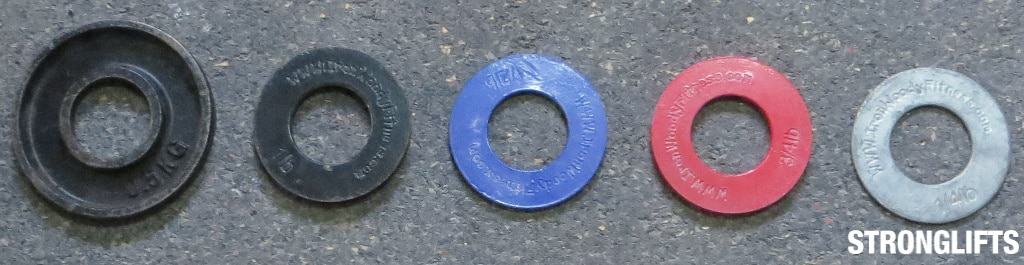
Microloading means adding less than 2.5kg/5lb per workout. Microloading works to increase your Bench Press by delaying plateaus. You must add weight to increase your Bench Press. But nobody can do it forever or we’d all Bench Press 500kg. Everyone plateaus eventually by missing reps. The best way to break plateaus is to not hit them in the first place. Smaller increments delay plateaus by slowing your progression.
Microloading is more useful on the Bench Press than on the Squat or Deadlift. The Bench Press works smaller muscles like your shoulders, chest and arms. Squats and Deadlifts work your bigger thighs and back muscles. Bigger muscles are stronger and can lift heavier weights. You can add 2.5kg/5lb each workout longer to your Squat and Deadlift. On the Bench Press the same increase leads to faster plateaus.
Here’s an example: let’s say you’re an intermediate lifter who Bench Presses 100kg, Squats 140kg and Deadlifts 180kg (220lb, 300lb, 400lb). Adding 2.5kg/5lb to that Deadlift is an increase of 1.25%. But adding it to your 100kg Bench Press is 2.5% increase. It’s twice as hard. It’s like increasing your Deadlift by 5kg/10lb to 185kg/410lb. You’re more likely to miss reps and plateau. Small increments are more effective for Bench Press.
The irony is the less weight you Bench Press, the harder adding 2.5kg/5lb each workout is. Adding 2.5kg/5lb to a 100kg/200lb Bench Press is a 2.5% increase. Bench Press half that, 50kg/110lb, and that same 2.5kg/5lb is a 5% increase. Most people expect microloading is more useful for stronger, experienced Bench Pressers. But it turns out to be the opposite. The less you Bench Press, the more you need microloading to get stronger.
To microload you need small plates. Most gyms don’t have plates lighter than 1.25kg/2.5lb. And in some gyms the lightest plates are 2.5kg/5lb. This forces you to add 5kg/10lb each workout. On a 50kg/110lb Bench Press, that’s a 10% increase. It’s too much. It will work on your Squat and Deadlift for a while because they use bigger muscles. But it won’t work on your Bench Press. You’ll miss reps fast and plateau.
Get smaller fractional plates that weigh 0.25kg to 1kg (lb version are usually 0.25-1lb). Put them in your gym bag so you can use them in your gym. Halve the weight increase on your Bench Press from 2.5kg/5lb per workout to 1.25kg/2.5lb or even 0.5kg/1lb. This means you add 0.25kg/0.5lb on each side of the bar. You’ll progress slower but also delay plateaus. Your Bench Press will increase longer which is more motivating.
Some people question the effectiveness of microloading. It’s true plates often vary in weight. The 20kg/45 plates can often be off by 1kg/2-3lb. This negates the microloading. But it also misses the point. The goal isn’t a one-time microloading. The goal is cumulative microloading. Add 1kg/2lb to your Bench Press each week and it will increase by 52kg/104lb a year. The random weight variation is irrelevant. The upward trend matters.
Don’t be shocked by the price per kg/lb of fractional plates. They’re indeed more expensive than regular plates. But that’s normal. It costs more to manufacture plates at a tighter weight tolerance. This is what you’re paying for. Make sure you get fractional plates with 5cm/2″ holes so they fit on your Olympic Barbell. Here are some fractional plates I recommend to increase your Bench Press…
There are tons of DIY solutions for cheapskates with time. You can put several collars on your barbell. You can loop small chains around it. You can put ankle weights on your bar. You can load it with heavy washers from a hardware store. I’ve heard some people fill small bags with sand and put that on the bar. Whatever works. Fractional plates are just easier to use, easier to take to the gym and they last forever.
Microload your Bench Press as soon as you struggle to get your reps. If you barely got 5×5, don’t add 2.5kg/5lb next time. You might miss reps and then have to repeat the weight or deload. Switch to increases of 0.5/1lb per workout. Your Bench Press will increase more slowly. But you’ll be less likely to miss reps and spend workouts repeating the weight or deloading. Your Bench Press ends up increasing faster, without frustration.
Women should microload the Bench Press from day one. Women are smaller than men. Their muscles are smaller. Smaller muscles can lift less weight. That’s why men’s Bench Press records are higher than women’s, and why sports are divided by gender. 2.5kg/5lb increases don’t work for women (or small/older guys). You’ll go from Benching 40kg 5×5 one workout to barely getting one rep with 42.5kg next time. Microload.
Note that the StrongLifts 5×5 app for iPhone and Android will tell you to microload your Bench Press when it detects you’re struggling to increase the weight. You can also manually microload anytime by changing the weight increases in the app settings. And the app will tell you how many sets, reps and weight to do each workout to increase your Bench Press. The StrongLifts 5×5 app is free to download on iPhone and Android.
Rest Longer Between Bench Press Sets
Rest five minutes between heavy Bench Press sets. You’ll get more reps and Bench Press more weight. Resting longer increases the amount of ATP available for your next set. ATP is your main energy source for lifting weights. Each Bench Press set uses ATP. 80% is back if you rest three minutes. 95% is back after five minutes. Rest five minutes between hard sets to increase ATP. You’ll Bench Press more reps and weight.
Shorter rest times will make you sweat more. But they won’t increase your Bench Press. They force you to Bench Press with depleted ATP stores which is harder. Resting longer than five minutes is unnecessary. You have a little more ATP available but you spend more time in the gym. It’s a trade-off with diminishing returns. I never rest longer than five minutes between Bench Press sets.
Keep your workouts short by only resting five minutes between hard Bench Press sets. You don’t have to rest that long between easier sets. If you’d like to know how long to rest between every Bench Press set, use the StrongLifts 5×5 app for iPhone and Android. The built-in timer will tell tell you how long to rest between every warmup and work sets. It will help you increase your Bench Press without spending your life in the gym.
Improve Your Bench Press Warmup
Warmup for your Bench Press by doing several lighter sets first. Do two sets of five with the bar then add weight on each set until you reach your work weight. Use the warmup sets to practice proper Bench Press form and warmup your muscles. You’ll make less mistakes on your heavy sets, and hurt yourself. Take your time to warmup properly and you’ll increase your Bench Press.
Don’t start your Bench Press with a big plate of 20kg/45lb on each side. The wrong way to warmup is 12x60kg, 8x80kg and then 5×5 100kg. That’s 1360kg lifted and 20 reps. The proper way to warmup is 5x20kg, 5x20kg, 5x40kg, 3x60kg, 2x80kg, 1x90kg and then 5×5 100kg. It’s only 830kg but 21 reps. You’re less tired because you warmed up by lifting 40% less weight. But you did one rep more to practice proper Bench Press form.
Always warmup with the empty bar when you Bench Press. Add 10-20kg/25-45lb per set until you reach your work set. Don’t do more than five reps per set. Decrease the reps as your warmup weight increases. If you’d like to know the optimal sets, reps and weight to warmup with for any Bench Press weight, use the warmup calculator in my StrongLifts 5×5 apps for iPhone/Android. It will help you increase your Bench Press.
Bench Multiple Reps with One Breath
This is an advanced Bench Press tip. Not for beginners.
Try to Bench Press multiple reps with a single breath. Setup on the bench with your chest up, shoulder-blades squeezed and back arched. Unrack the bar with locked elbows and move it over your shoulders. Take a big breath and hold it. This will keep your chest up, shoulders tight and back arched. Now lower the bar and Bench Press as many reps as you can without releasing your breath. You’ll be tighter and bench more reps.
Forget about this tip if you’re new at Bench Pressing. Beginners shouldn’t hold their breath for reps. They can’t anyway. But your chest must stay up to keep the movement effective. It makes the weight easier to Bench Press. Breathing between reps by emptying your lungs relaxes your chest. It makes the weight harder to Bench Press. Breathe between reps at the top of your Bench Press. But make it quick breaths to stay tight.
If you’re more experienced, try to Bench Press several reps with one breath. Take a deep breath at the top before you do your first rep. Don’t wait to lower the bar. Do it right after you took that breath. Then Bench Press as many reps as you can while holding you breath. On a hard set of five, I usually get at least three reps with one breath. This keeps my chest tight and saves energy for the harder last two reps.
You’re overdoing it if you feel like passing out. The point is to stay tight, not pass out and drop the bar on your face. If the pressure is too high to hold your breath, exhale. Breathe against you closed glottis on the way up. Or take a quick breath at the top. But avoid losing tightness by emptying your lungs. And make sure you don’t wait too long to lower the bar after you take your first deep breath.
Watch Out with Shiny Objects

Shiny objects are chains, bands and boards. You use them by Bench Pressing with chains or bands attached to the bar or boards on your chest. The idea is to emphasize the lockout (to “strengthen your triceps”…). Chains and bands make the weight heavier at the top. Boards decrease the range of motion which allow you to Bench heavier weight. These shiny objects look cool but aren’t that effective for raw Bench Pressers like us.
Geared Bench Pressers benefit most from benching with chains, bands and boards. They wear bench shirts that stretch when they lower the bar to their chest. This makes the bottom and hardest part of the Bench Press easier. The shirt helps pressing the weight from their chest. But it can’t help the top part of the movement. That’s why geared Bench Pressers emphasize the lockout with bands, chains and board work.
Raw Bench Pressers like us don’t wear bench shirts. We don’t get help at the bottom. We must Bench the weight ourselves. Pressing the bar off our chest is therefore always the hardest part. We rarely fail the lockout. When we do, it’s because we lack the force to move the bar through our sticky point. Strengthening the lockout is useless if we can’t get the bar off our chest first. That’s why we must train the full range of motion.
This doesn’t mean chains, bands and boards are useless. But most people use them wrong. They Bench Press with chains to look cool. They Bench Press with boards so they can brag they benched three plates. And they neglect to Bench Press with a full range of motion in the process. The shiny objects strengthen their lockout. But their regular Bench Press doesn’t increase because they’re not geared Bench Pressers.
Keep it simple and Bench straight weight. Don’t use chains, bands or boards until you can Bench Press 100kg/220lb at least. If you can’t Bench that, your triceps isn’t weak. Your lockout isn’t weak either. Your whole body and range of motion are weak. The simplest, most effective way to strengthen both is to Bench Press straight weight with a full range of motion. Don’t let shiny objects distract you from doing this.
Add Paused Bench as Assistance

This is an advanced Bench Press tip. Not for beginners.
The Paused Bench Press is the best assistance exercise for raw Bench Pressers like us. It’s like a Bench Press but with a pause of two-three seconds at the bottom. Lower the bar to your chest. Pause when the bar touches your chest. Stay tight while you count to three. Then press the bar away from your chest over your shoulders. Repeat. Adding the Paused Bench Press as assistance work will increase your Bench Press.
The Paused Bench Press strengthens the bottom of your Bench Press. As explained earlier: pressing the bar from your chest is the hardest part for raw Bench Pressers like us. The Paused Bench Press increases time under tension at the bottom. It develops force to push through the sticky point on your regular Bench Press. World Champion Mike Tuchscherer introduced me to this exercise several years ago.
The key is to start each rep at the top like your normal Bench Press. Don’t start with the bar on your chest like on the Overhead Press. Proper form on the Bench Press starts with the bar at the top. If you reverse the order by starting at the bottom, it will be harder to setup properly. You’ll have less carry-over to your regular Bench Press. Pause Bench Press like you normally Bench. Just add that two-three second pause at the bottom.
The Paused Bench Press doesn’t substitute your regular Bench Press. To increase your Bench Press, you must Bench Press. Don’t pause every rep you Bench Press. Don’t warmup by pausing or you’ll pre-exhaust you muscles for the Bench Press. Do your regular Bench Press with a touch and go at the bottom (no bouncing). Once done, do the Paused Bench Press separately as assistance work for your regular Bench Press.
On StrongLifts 5×5, you can do the Paused Bench Press at the end of workout A. Three sets of five with about 20% less than you Bench Press. Just make sure you milked out other options first. Microload, repeat the weight if you get stuck, deload after three fails, switch from 5×5 to 3×5 and so on. Only then should you add the Paused Bench. Note that the StrongLifts 5×5 app will advise you how to progress on your Bench Press.
Be Patient
Your Bench Press will increase slower than your Squat and Deadlift. You’ll miss reps sooner. And you’ll Bench Press less weight than you Squat or Deadlift. The Bench Press works smaller muscles. Smaller muscles can’t lift as heavy as big ones. That’s why raw Squat records are higher than for the Bench Press. That’s also why Squatting 140kg/300lb is easier than Benching the same weight. And that’s why patience is key.
Reset your expectations. It’s not realistic to expect 10kg/20lb PRs on your Bench Press. Adding that to a 100kg/220lb is a 10% improvement. It’s like the 180kg/400lb Bench Presser hitting a 18kg/40lb PR overnight. You rarely hear that. You usually hear they hit a small PR of only 2.5kg/5lb. That’s a 1.25% improvement. It’s like you adding 1kg/2.5lb to a 100kg/220lb Bench Press. It’s how you should expect your Bench Press to increase.
Make a big a deal about small PRs. It doesn’t sound impressive to hit 1kg/2lb PRs on your Bench Press. But it adds up. Increase your Bench Press by 1kg/2lb every week and you’ll Bench Press 52kg/104lb more in a year. That 60kg/135lb Bench Press turns into 112kg/249lb. This is more than what most guys in gyms Bench Press. All it takes is chipping away at it with small increments. Be patient and your Bench Press will increase.
Join the Stronglifts community to get free access to all the spreadsheets for every Stronglifts program. You’ll also get 15% off Stronglifts Pro, and daily email tips. Enter your email below to sign up today for free.


