


Here’s how to Overhead Press with proper form…
- Stand with the bar on your front shoulders, and your hands next to your shoulders
- Press the bar over your head, until it’s balanced over your shoulders and mid-foot
- Lock your elbows at the top, and shrug your shoulders to the ceiling.
Hold the bar for a second at the top. Then lower it back to your front shoulders and repeat. Don’t use your legs, keep them straight. Overhead Press five sets of five each StrongLifts 5×5 workout B.
The Overhead Press is a full-body, compound exercise. Your shoulders and arms press the weight over your head while your legs, lower back, and abs balance you. The Overhead Press is one of the best exercises to build strong, muscular, and healthy shoulders with bigger arms.
To avoid shoulder pain, Overhead Press with a narrow grip so you don’t flare your elbows. Then shrug your shoulders at the top. Press the bar over your head, lock your elbows, and shrug your shoulders towards the ceiling. This engages your traps and prevents shoulder impingement.
The Overhead Press is the hardest exercise on StrongLifts 5×5. You’ll press less weight than on other exercises because it uses small muscles. You’ll struggle to add weight before you do other exercises. The worse your form is, the more you’ll struggle. Proper form is therefore crucial.
This is the definitive guide to proper form on the Overhead Press.
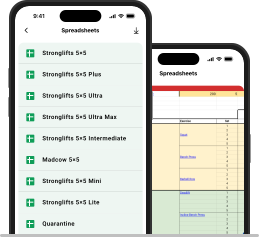
Join the Stronglifts community to get free access to all the spreadsheets for every Stronglifts program. You’ll also get 15% off Stronglifts Pro, and daily email tips. Enter your email below to sign up today for free.
Introduction
How to Overhead Press

Overhead Press inside your Power Rack if it’s tall enough. If it’s too low like mine, set the bar in the outside uprights of your Power Rack and unrack it. If your Power Rack has no outside uprights, or you have no Power Rack, pull the bar from the floor on your shoulders (Power Clean it). Once the bar is on your front shoulders, follow these five simple steps to Overhead Press with proper form…
- Setup. Stand with the bar on your front shoulders. Narrow grip, straight wrists, vertical forearms. Lock your knees and hips.
- Lift Your Chest. Raise your chest towards the ceiling by arching your upper-back. Try to touch your chin with your upper-chest.
- Press. Take a big breath, hold it, and press the bar in a vertical line. Don’t press it in front or behind your head. Press it over your head.
- Move Forward. Stay close to the bar while you press the weight up. Shift your torso forward once the bar has passed your forehead.
- Lockout. Hold the bar over your shoulders and mid-foot for proper balance. Lock your elbows. Shrug your shoulders to the ceiling.
Return the bar to your shoulders after each rep. Exhale, raise your chest, and set your forearms vertically Take a big breath and press your next rep. Don’t bend your legs. This takes work away from your shoulder muscles by using your stronger leg muscles. Keep your hips and knees locked from start to finish. If you can’t, the weight is too heavy. Lower it so your shoulders do most of the work when you Overhead Press.
Overhead Press Form 101

Your build determines your ideal Overhead Press form. If you have wider shoulders than me, you should grip the bar wider than I do. If you have long forearms like me, your wrists may bend if you try to rest the bar on your shoulders. Don’t copy someone’s Overhead Press Press form unless you have the same build. Follow these general Overhead Press guidelines instead, and tweak your form as you gain experience.
- Stance. Heels hip-width apart. Feet flat on the floor. Point them slightly out.
- Legs. Keep your knees and hips locked from start to finish. Bending is cheating.
- Grip. Full grip. Bar in the base of your palm, close to your wrists. Squeeze the bar.
- Grip Width. Narrow grip just outside your shoulders. Don’t use a wide Bench grip.
- Wrists. Straight line bar to wrist to elbow. Don’t let your wrists bend back or they’ll hurt.
- Elbows. Almost under the bar from the side view. About 45° in from the front. No flaring.
- Forearms. Vertical to the floor from all angles: perpendicular from the side and front view.
- Upper-arms. Not parallel to the floor. This isn’t a Front Squat. Your forearms must be vertical.
- Shoulders. Hold the bar on your front shoulder muscles. Shrug your shoulders to the ceiling.
- Chest. Lift your chest by arching your upper-back. Try to touch your chin with your upper-chest.
- Upper-back. Arch your upper-back to lift your chest. Do not squeeze your shoulder-blades.
- Head. Keep your head neutral. Look forward. Don’t look at the ceiling or the bar while you press.
- Lower Back. Keep your lower back neutral. Don’t over-arch and hyper-extend your lower spine.
- Torso. Lean slightly back at the bottom. Move forward at the top. Don’t over-arch your lower back.
- Way Up. Press the bar in a vertical line. Stay close to the bar by moving your torso forward at the top.
- Lockout. Hold the bar over your shoulders. Shrug your shoulders to the ceiling. Lock your elbows.
- Way Down. Lower the bar to your shoulders. Lower it under control but not slow. No elbow flaring.
- Breathing. Inhale at the bottom before you press. Hold your breath at the top. Exhale at the bottom.
- Bar Path. Press the bar in a vertical line from your shoulders over your head, above your shoulders.
- Between Reps. Exhale, raise your chest, put your forearms vertically take a big breath, and press again.
Muscles Worked
The Overhead Press works your whole body. Your shoulders and arms are the prime movers to press the weight over your head. But everything between the floor and your shoulders must stay tight to balance you and the bar. This makes the Overhead Press a full-body exercise that works several muscles at the same time with heavy weights. Here are all the muscles the Overhead Press works:
- Shoulders. You must raise your upper-arms to lift the bar when you Overhead Press. This works your shoulder muscles: your front, side, and back deltoid. It develops these three muscle heads evenly with heavy weights so you build wide shoulders that fill up your shirts.
- Arms. You must straighten your elbows to press the weight overhead. This works the muscles on the back of your arms, your triceps. Their muscle mass is much larger than your biceps. Bigger triceps build bigger arms. Your forearm muscles also work to hold the bar.
- Rotator Cuff. Balancing the bar overhead works the small muscles that cover your shoulder blades: supraspinatus, infraspinatus, teres minor, and subscapularis. These rotator cuff muscles stabilize your shoulders and prevent dislocations. Strengthening them protects your shoulders.
- Abs. Your core muscles stabilize your body while your shoulders and arms press the weight overhead. They keep you from collapsing under the bar. This strengthens your abdominal muscles, obliques, and lower back. Stronger abs are more muscular. Eat right so they show.
- Legs. Your legs balance your body while your shoulders and arms press. This works your hips, thighs, calves, and ankles. The Overhead Press won’t work them like Squats because your legs don’t move. They stay straight. But they have to do isometric work.
The Overhead Press works your whole shoulder girdle. It works it evenly and with heavier weights. It saves time by working your three shoulders heads at the same time.
Failing Reps

The Overhead Press may look dangerous because you’re pressing weight over your head. But it’s safer than the Squat or Bench Press. You can never get stuck under the bar when you Overhead Press. If you fail to press the weight, you can simply lower it back on your shoulders. You then rack it in your Power Rack or return it to the floor. You can even drop the bar if you use bumper plates. But you never get stuck under the bar.
Fear of dropping the bar on your head is common if you’ve never Overhead Pressed before. But it’s unfounded. Weight too heavy for you to press and control won’t leave your shoulders. You’ll usually fail at the bottom because it’s harder than the top. You therefore can’t drop the bar on your head because weight too heavy for you to control never gets that high. If you can press the bar past your head, you can finish and control it.
There are only two ways to drop the bar on your head. One, you Overhead Press with a thumbless grip. The bar can slip out of your hands if you don’t wrap your thumbs around the bar. Press with a full grip. Two, you don’t lock your elbows at the top. This forces your muscles to support the weight over your head. If they’re tired, you can lose the bar and hurt yourself. Lock your elbows at the top so your skeleton can hold the weight.
You don’t need to Overhead Press inside the Power Rack for safety. You can simply lower the bar to your shoulders when you fail reps. If you feel more confident pressing in the Power Rack with the safety pins set, do it. I always Overhead Press outside my Power Rack because it’s too short to press inside. I’ve been pressing like this for over 10 years and not once did the bar drop on my head. It’s unlikely to ever happen.
Overhead Press Videos
Here’s a video where you can see me Overhead Press with proper form as part of the StrongLifts 5×5 Workout B. You can also hear me answer common questions about the Overhead Press at the same time. Watch from 18:34 for the Overhead Press tips.
Overhead Press Technique
Stance

Hip-width Stance. Overhead Press with your heels under your hips. This means the narrower your hips are, the narrower your stance should be. But your heels shouldn’t touch. That’s a Military Press and it makes it harder to balance yourself to press heavy. Your heels shouldn’t be shoulder-width apart like on the Squat either. It won’t feel right. Stand narrower than when you Squat, similar to how you Deadlift.
Feet Flat on The Floor. You have better balance when your whole foot is flat on the floor. It increases the surface in contact with the floor. Better balance is more safety, more bar control, and better form. This increases how much you Overhead Press. Don’t raise your toes. Don’t lift your heels and tip-toe either. This is cheating. Keep your toes, forefoot, and heels on the floor when you Overhead Press.
Feet Parallel. Don’t use a staggered stance by putting one foot forward. This might give you better balance and stability when you Overhead Press. But it puts uneven pressure on your lower spine and hips. It can cause lower back pain. Overhead Press with your feet parallel. You can turn them out 15°. But they should be aligned horizontally when you look down. Don’t let one foot be more forward than the other.
Legs

Knees Locked. Your shoulder and arm muscles press the weight overhead, not your legs. Any knee bending is cheating. It takes work away from your shoulder muscles. Keep your legs straight by locking your knees and squeezing your quads. If your knees hurt, you’re taking your joints past their normal range of motion. Don’t hyper-extend. Lock gently. If you can’t keep your knees locked, the weight is too heavy.
Hips Locked. Bending your hips is a Push Press. This is a different exercise that uses your stronger hip muscles to drive the bar off your shoulders. This allows you to press heavier weights. But it doesn’t work your shoulders like a strict Overhead Press does. Bending your hips on the Overhead Press is cheating. Keep your hips locked. Squeeze your glutes if you have to. Your legs should balance you but not move.
Grip

Full Grip. Wrap your thumbs around the bar. This makes the Overhead Press safer. The bar can’t slip out of your hands and drop on your head. It also makes you stronger because you can squeeze the bar harder. This engages your arms, shoulders, and chest muscles more. And the bar can’t move in your hands and cause bad form. You can Overhead Press more weight, more safely, with a full grip than a thumbless one.
Grip Low Palm. The bar must rest on the heel of your palm, close to your wrists. This allows your forearms to press directly into the bar using the force your shoulders, arms, and chest muscles generate. Don’t grip the bar mid-palm or your wrists will bend back. This puts the bar behind your forearm bones instead of above it. It makes the weight harder to Overhead Press and hurts your wrists. Grip the bar low palm.
Bulldog Grip. Grip the bar like a Bulldog plants his paws. Put your hands on the bar just outside your shoulders. Then rotate your hands in to put the bar in the base of your palms. Close your hands and squeeze the bar so it can’t move. This Bulldog Grip will feel weird at first. It can feel less safe. But your thumbs are around the bar so it’s safe. And the bar rests lower in your palm so it’s more effective. Practice to get used to it.
Grip Width

Narrow Grip. Hold the bar just outside your shoulders. The exact grip width depends on how wide they are. The wider your shoulders, the wider your grip. The narrower, the narrower your grip. Your grip is optimal when your forearms are vertical to the floor at the bottom. If they’re inclined, your grip is too wide and the weight will be harder to Overhead Press. Grip the bar narrow to put your forearms vertically.
Vertical Forearms. Each rep you Overhead Press must start with vertical forearms at the bottom. If they’re inclined, the weight will be harder to press. You can’t grip the bar too narrow because your shoulders are in the way. But you can grip it too wide. Videotape yourself from the front while you Overhead Press. if your forearms are inclined at the bottom, your grip is too wide. Narrow it so your forearms are vertical.
No Bench Grip. The wider grip you use on the Bench Press doesn’t work on the Overhead Press. One, it puts your forearms incline at the bottom. This makes the weight harder to Overhead Press. Two, it makes your elbows flare. This is bad for your shoulders. Narrow your grip so your forearms are vertical. Your elbows should be 45° in at the bottom. This is safer for your shoulders and makes the weight easier to Overhead Press.
Wrists

Straight Wrists. Overhead Press with your wrists almost straight. Your knuckles shouldn’t be vertical or the bar will drop out of your hands. They should be about 75° back with your wrists slightly bent. This puts the bar over your forearm bones. It prevents it from bending your wrists back. It makes the weight easier to Overhead Press and prevents wrist pain. Don’t press with bent wrists. It’s ineffective and will hurt.
Grip Low Palm. Keep your wrists straight using the Bulldog Grip. Grab the bar with open hands just outside your shoulders. Rotate your hands inwards, like a bulldog plants his paws. This puts the bar on the heels of your palms. Close your hands and squeeze the bar so it can’t move. Rotate your elbows down and the bar will rest over your forearm bones. Your wrists won’t bend and hurt. The weight will be easier to Overhead Press.
Elbows

Under The Bar. The most effective way to Overhead Press is with vertical forearms. Most people press with their elbows back at the bottom. This puts your forearms incline and kills strength. Move your elbows forward before you press. Move them under the bar so your forearms are vertical looking from the side. Press from here and the bar will move in a vertical line up instead of away from your face. You’ll press more weight.
Elbows 45°. Keep your elbows close to your torso. They can’t flare to the side but shouldn’t point forward either. Tuck them 45° so they touch your lats at the bottom. You need a narrow grip to do this. Don’t grip the bar wide like when you Bench Press or your elbows will flare. Grip it narrow, just outside your shoulders. Hold your elbows close as you press the weight. This is safer for your shoulders and more effective.
Lock At The Top. The rep doesn’t count if you don’t lock your elbows at the top. Worse, if your muscles are tired you could lose the bar and drop it on your head. Lock your elbows at the top. Finish each rep by straightening your arms and shrugging your shoulders. You can hold the bar longer and more safely with locked elbows. And as long as you lock gently and don’t hyper-extend your arm, your elbow joint will be safe.
Forearms

Vertical From The Side. Put your forearms vertically to the floor at the start of each rep. They’ll usually be inclined because your elbows are too far back. Move them forward before you press. Keep your wrists straight by holding the bar low hand using the Bulldog Grip. All of this will improve power transfer from your shoulders and triceps into your forearms to the bar. It increases how much you Overhead Press.
Vertical From The Front. Your forearms must also be vertical with the floor when looking from the front or back. Don’t Overhead Press with the wider grip you use on the Bench Press. Gripping the bar wide puts your forearms incline at the bottom, which is ineffective. Narrow your grip so your hands are just outside your shoulders. The exact width depends on your shoulder width. But your forearms should be vertical.
Upper-arms
No Front Squats! The Overhead Press is not a Front Squat. Your upper-arms must be horizontal on the Front Squat to keep heavy weight on your shoulders and off your wrists. Your arms don’t move. They do on the Overhead Press. And horizontal upper-arms turn the bottom of the press into a triceps extension. This is hard and ineffective. Keep your upper-arms down at the bottom so you Overhead Press with vertical forearms.
Shoulders
Bar on Shoulders. Setup with the bar on your shoulders. Hold it on your muscles, in front of your throat. Raise your chest by arching your upper-back. Shrug your shoulders slightly but don’t touch your ears. Squeeze your armpits by pushing your lats against your triceps. Put your forearms vertically with your wrists almost straight. Your body will be tight. This gives the bar a better platform to press the bar.
Shrug at The Top. Shrug your shoulders towards the ceiling at the top. This engages your trapezius muscles and prevents shoulder injuries. The rep doesn’t count if you didn’t finish it by shrugging your shoulders. Press the bar until your elbows are locked. Then keep pressing by raising your shoulder. You’ll achieve a stronger lockout position, build bigger traps, and avoid shoulder impingement from the Overhead Press.
Chest
Raise Your Chest. Lift your chest before you press the bar off your shoulders. This creates a tighter surface to press from. Make a big chest and try to touch your chin with your upper-chest. Do this by arching your upper-back. Keep your lower back neutral, don’t over-arch. Squeeze your armpits and take a big breath to lock your chest in position. Remember to raise your chest between reps before pressing the next one.
Upper-back
Arch Your Upper-Back. Pressing with your upper-back rounded is ineffective. It drops your shoulders and the bar. It increases the range of motion and puts your forearms incline. It makes the weight harder to Overhead Press. Arch your upper-back before you press the bar. Don’t squeeze your shoulder-blades together. Don’t over-arch your lower back. Just raise your chest to give the bar a tighter surface to press it from.
Head

Look Forward. Fix a point on the wall in front of you. If you face a mirror, look “through” it. Don’t look at the ceiling or the bar while you Overhead Press. This can cause excess leanback. Don’t look aside or tilt your head either. This can twist and hurt your neck. Keep your head neutral while you Overhead Press. Stare at a point level with your eyes in front of you. Keep staring until your set is over.
Lower Back
Stay Neutral. Keep the natural arch in your lower spine when you Overhead Press. Your lower back shouldn’t be flat but have a natural curve like when you stand. Don’t allow your lower back to hyper-extend by leaning back excessively when you struggle to press the weight. This will squeeze your spinal discs and can hurt your back. Keep your lower back neutral. Take a big breath before you press and squeeze your abs hard.
Torso
Move Forward. Lean slightly back before you press the weight off your shoulders. Do this by pushing your hips forward without over-arching your lower back or bending your knees. This keeps your head back and out of the way of the bar. Now press the weight in a vertical line up while moving your torso forward. Don’t stay back or the weight will be harder to press. Get closer by moving your torso forward while the bar goes up.
Way Up
Press in Vertical Line. You can Overhead Press more weight if you press in a vertical line rather than a curve. It’s a shorter distance. But your head is in the way of the bar at the bottom. You must create space for the bar to move in a vertical line up. Lean back at the bottom before you press the weight. Keep your lower back neutral while moving your hips forward. This will keep your head back and out of the way.
Stay Close. Keep the bar close to your face on the way up. The further it moves away from your face and shoulders, the harder to press it. It’s like doing front raises. Press the bar in a vertical line up, not a curve. Lean back at the bottom to get your head out of the way. Once the bar clears your head, move your torso forward to keep the bar close. The movement will feel shorter and the weight easier. You’ll Overhead Press more weight.
Straight Legs. Don’t let your knees or hips bend on the way up. Press the weight using your shoulders and arms muscles only. Do this by keeping your legs straight. Squeeze your butt (glutes) and the front of your thighs (quads). Any bending of your legs is cheating. It takes work away from your shoulder muscles. If you can’t keep your legs straight when you Overhead Press, the weight is too heavy. Lower it.
Elbows 45°. Don’t flare your elbows on the way up. Keep them close to your torso. Setup with a narrow grip just outside your shoulders. Raise your chest by arching your upper-back. Put your forearms vertically. Rest your triceps on your lats. Your elbows will be about 45° in at the bottom. Now press the weight while keeping your elbows close. They shouldn’t point straight forward. But they shouldn’t flare to the side either.
Lockout

Bar Over Shoulders. The bar is balanced when you lock it over your shoulders at the top. Holding it in front or behind them is ineffective. The bar will pull you forward or back. Your shoulders will waste energy trying to stop you from losing the bar. You might have to step forward or back to avoid losing balance. Lock the bar over your shoulders. This makes it easier to hold and Overhead Press.
Lock Your Elbows. Don’t keep your elbows bent at the top. One, the rep doesn’t count. Two, you could lose the bar and drop it on your head. Lock your elbows at the top of each rep so your skeleton can hold the weight. This is safe for your elbow joints as long as you don’t hyper-extend your arms. Lock your elbows gently without going past their normal range of motion. Don’t aim for more tension. Aim for more weight.
Shrug! You must shrug your traps at the top. If you don’t shrug, your upper-arm bones will mash your rotator cuff tissues against your AC joint on every rep. This will hurt and injure your shoulders. Finish each rep by shrugging your shoulders towards the ceiling. Press the bar over your head, lock your elbows, and then shrug. The bar will be easier to hold because you’re using more muscles. And your shoulders will be safe.
Way Down
Mirror The Way Up. The way down must be a mirror of the way up. Lower the bar in a vertical line to your shoulders. Lean slightly back by moving your hips forward so the bar doesn’t hit your head. Keep your lower back neutral, don’t over-arch. Keep your elbows 45° in. Keep the bar close to your face so you don’t waste effort on the way down. And keep your forearms vertical with your elbows almost under the bar.
Under Control, Not Slow. Lower the bar too slow and you’ll waste strength on the way up. Lower it too fast and you’ll struggle to maintain proper form. The optimal lifting tempo is one where you can maintain proper form and press the most amount of weight. Slow down if you’re new to the Overhead Press, go faster if you’re more experienced. Don’t go slow to feel the muscles more, add weight instead.
Breathing
Inhale At The Bottom. Setup with the bar on your shoulders. Raise your chest by arching your upper-back. Keep your lower back neutral, no over-arching. Put your forearms vertically and rest your triceps on your lats muscles. Now take a big breath, hold it, and press. Breathing in increases the pressure in your torso. It locks your chest in position and creates a tighter surface to press the bar. This boosts strength.
Hold At The Top. Hold your breath on the way up. Don’t exhale or your chest will deflate like a balloon and cave in. Your upper-back will round and the rep will be harder to Overhead Press. Don’t exhale at the top either. You’ll lose tightness again which makes the next rep harder to press. Take a big breath at the bottom, hold it on the way up, and hold it at the top. Exhale once the bar is back on your shoulders.
Exhale At The Bottom. Exhale once the bar is back on your shoulders. Get tight by raising your chest and arching your upper-back. Then take a big breath, hold it, and press your next rep. If the weight is heavy and moves slowly, you can exhale on the way up. But don’t empty your lungs. Exhale against your closed glottis (or grunt) to release some pressure. On most reps, you can wait to exhale until the bar is on your shoulders.
Bar Path
Vertical Line. Press the bar in a vertical line. A perpendicular bar path is the shortest distance between your shoulders and the lockout. Moving the bar over a short distance is easier than a long one. It increases how much you Overhead Press. Videotape yourself from the side view to check your bar path. If it isn’t vertical, you’re leaving kg/lb on the bar. Press more vertical and you’ll Overhead Press more weight.
No Curve. Don’t press the bar in J-curve away from your face. This increases the range of motion and makes the weight harder to press. It moves the bar further away from your shoulders and wastes energy. Press in a vertical line. Keep the bar close to your face. Hold it over your shoulders at the top. Don’t lockout the bar behind your shoulders or you’ll increase the range of motion again. Go short and you’ll press more weight.
Move Your Torso. Your head blocks the bar when you Overhead Press. You can’t press it from your shoulders straight overhead without hitting your chin and nose. You must create space for the bar by leaning slightly back at the bottom. Move your hips forward while keeping your lower back neutral. This keeps your head out of the way. Now press. Move your torso forward once the bar passes your head to stay close to it.
Between Reps
Get Tight. Rest at the bottom for a second before doing your next rep. Use this rest to get everything tight. Raise your chest by arching your upper-back. Put your forearms vertically to the floor. Take a big breath, hold it, and then press your next rep. You’ll have better form which will increase how much weight you can Overhead Press. You’ll gain more strength and muscle while lowering the risk of injury.
Don’t Bounce. You can Overhead Press more reps if you bounce between reps. Lowering the bar stretches your muscles. They can contract harder if you quickly rebound the bar off your shoulders to do your next rep. But you must maintain proper form for this to work. If your chest collapses or you press the bar in a J-curve, you lose the advantage bouncing brings. Better is to pause a second at the bottom between reps.
Common Pains
Lower Back Pain
Do NOT lean back when you struggle by arching your lower back. You might get the rep but you risk hurting yourself. Keep your lower back neutral. Maintain a natural arch, like when you stand. Your lower back shouldn’t be flat, but it shouldn’t over-arch either. If you can’t keep your lower back neutral, the weight is too heavy. Consider it a fail instead of leaning back to get your rep at all costs. This is safer for your lower back.
You can lean back at the bottom of each rep to get the bar in a better position and press in a vertical line. But this lean back must come from your hips. You lean back by moving your hips forward, not by arching your lower back. Squeeze your glutes, abs, and quads to avoid lower back arching. If you’re new to the Overhead Press, this will be hard. Don’t move your hips at all for now to avoid lower back movement. Try it later.
Belts won’t prevent lower back pain from bad form. They can help you Overhead Press more weight by giving your abs something to push against. Your ab muscles can contract harder which gives your lower back support. But excess lower back arching can still happen, and it’s dangerous with or without a belt. Don’t wear a belt to make up for bad form. Overhead Press with your lower back neutral.
Neck Pain
Neck pain can happen if you Overhead Press with bad form. Watch out with grinders. Don’t try to press the weight at all costs using bad form. Pain can shoot in your neck or trap mid-set. It will hurt for 2-3 days every time you turn your head or tilt it back. This can force you to skip the Overhead Press until your neck heals. Neck pain slows your progress. Worse, it will come back unless you stop doing what causes it.
Overhead press with your head neutral. Keep it inline with the rest of your spine. Look forward. Fix a point on the wall in front of you. If you face a mirror, look “through” it. Don’t look at the ceiling or the bar. Don’t tilt your head to one side to make room for the bar. Instead, lean back slightly at the bottom by moving your hips forward without over-arching your back. This keeps your head out of the way, neutral, and level.
Keep your head under the bar at the top. Don’t lockout by moving your head forward like a chicken. Your torso should move forward to stay close to the bar. But your head must stay inline the rest of your spine. If you do it right, the bar will end over your shoulders and ears when you lockout the weight. If the bar is behind your ears, you’re pressing too far back or pushing your head too far forward. Both can cause neck pain.
Warmup properly. Don’t jump straight into your work weight. If you have to Overhead Press 5×5 50kg/110lb, do two sets with the empty bar first. Add 20kg/45lb and do three reps. Then do 5×5. You’re less likely to hurt yourself because your muscles and joints are warm, and you’ve practiced proper form. The weight will be easier to press too. Use the warmup calculator in the StrongLifts 5×5 app for iPhone and Android.
Common Mistakes
Cheating
The easiest way to cheat the Overhead Press is to use your legs. You start StrongLifts 5×5 doing the Overhead Press by the book. Your knees and hips stay locked. Only your arms move to press the bar over your head. After a couple of weeks, you’re Overhead Pressing double what you started with. But you’re struggling to get your reps with the heavier weights. So you use a bit of legs. And you get your reps. But it’s cheating.
Using your legs on the Overhead Press is a Push Press. The Push Press isn’t a bad exercise. It’s a great exercise. But it’s not the solution when you struggle to complete your reps on StrongLifts 5×5. You must use consistent techniques for each exercise. Because if your technique is consistent but the weight on the bar increases, you know you’re gaining strength and muscle mass. Adding body language or doing half-reps is cheating.
The Push Press involves more muscles by using your legs. They take work away from your shoulder muscles in the bottom position. The bar gets from your shoulders to your nose or forehead using the momentum you create with your legs. This doesn’t mean your shoulders don’t work. But they work less than when you Overhead Press with straight legs. And your shoulders can’t get stronger if you always use your legs to press.
Keep your legs straight when you Overhead Press. Don’t let them bend. If you can’t keep your legs straight, the weight is too heavy. Don’t try to get your reps by doing a Push Press so you can keep adding weight. You don’t turn your Squats into half Squats when the weight gets heavy. You don’t raise your torso more on the Barbell Rows either. Consider it bad form and a fail. Repeat the weight next time and lower it if you have to.
Excess Arching
Your lower back must stay neutral when you Overhead Press. Keeping a natural arch like when you stand. Don’t lean back by when you struggle to press the weight. Extreme arching of your lower spine (hyper-extension) squeezes your spinal discs from the back which can result in back pain.
Note that you should lean back when you Overhead Press. This moves your head out of the way of the bar. It allows you to press in a vertical line which is more effective. But this lean back must come from your hips. Keep your lower back neutral while moving your hips forward. Do this before the bar leaves your shoulders, not after or during. Once the bar moves, don’t lean back more. Move your torso forward to stay close to the bar.
If you can’t stop your lower back from arching, get tighter. Take a bigger breath before you press the weight. Squeeze your abs as if somebody were going to punch you in the stomach. Wearing a belt when you Overhead Press can cue you to squeeze your abs by giving them something to push against. if your lower back continues to hyper-extend, your abs are weak. Be patient and they’ll get stronger. Or add assistance for your abs.
Bent Wrists
Overhead Pressing with bent wrists hurts and is ineffective for lifting big weights. Your wrists must be almost straight with your knuckles about 75° back. The goal is to hold the bar close to your wrists, on top of your forearm bones. This stops the bar from hurting your wrists by stretching them beyond their normal range of motion. It also makes the weight easier to press because your vertical forearms can press directly into the bar.
Elbows Back
Most people Overhead Press with their elbows behind the bar. You’ll probably make this mistake. Elbows back puts your forearms incline instead of vertical. This creates bar path issues where you press it away from your face instead of straight up. Plus your forearms can’t push straight into the bar because they’re incline. Move your elbows forward. They should be slightly in front of the bar so your forearms are vertical.
Overhead Press Variations
Push Press
The Push Press is an Overhead Press using your legs. Stand with the bar on your shoulders. Bend your knees and hips slightly as if doing a Quarter Squat. Then quickly straighten them to create momentum. Once they’re locked, press the bar off your shoulders. You’ll press more weight than on the Overhead Press because the Push Press uses more muscles. It uses your stronger legs and hip muscles to press. Video from Klokov…
Using your legs when you struggle on the Overhead Press is cheating. It takes work away from your shoulders. Your legs lift the bar to your nose while your arms lock it out. Your shoulders don’t have to work as hard in the bottom. The Push Press doesn’t develop the shoulder strength and muscle mass the Overhead Press builds. It doesn’t matter if you can lift more weight on the Push Press. It’s mostly legs and hips.
Some think the Push Press increases the Overhead Press. Yes, the weight, is heavier and your arms lockout heavier weights. But you have to lift the bar to your nose first. That’s the job of your shoulders. They can’t get stronger if you always rely on your legs to lift the bar out the hardest bottom position. Your shoulder muscles will stay weak and your Overhead Press won’t increase if you only Push Press.
If you can’t Overhead Press without using your legs, the weight is too heavy. Don’t do Push Presses to get your reps. You don’t turn your Squats into half Squats or Barbell Rows into Deadlifts when the weight is heavy. You keep your technique consistent because that’s how you know more weight on the bar leads to more strength and muscle gains. Keep your legs straight. Any bending is a failed rep on StrongLifts 5×5.
The Push Press isn’t a bad exercise. It’s a great exercise to lift heavy weights overhead. It’s a great assistance exercise for the Overhead Press when you use it as such. I like the Push Press a lot. But it’s not a substitution exercise for the Overhead Press. The only way to get better at the Overhead Press it to Overhead Press. Turning your Overhead Press into a Push Press when you struggle makes you weaker at it, not stronger.
Military Press
The Military Press is a strict Overhead Press. It uses a narrower, military stance. You stand at attention with your heels together and toes out. You then press the bar from your shoulders over your head. But you don’t lean back by moving your hips forward. You’ll lift less weight on the Military Press because it’s stricter than the Overhead Press. Many people call the Overhead Press a Military Press but they’re different exercises.
The only reason to use the Military Press is if you want to make the Overhead Press harder on purpose. But few people want that. The Overhead Press is hard enough. It uses small muscles. You’ll struggle to get your reps faster than on other exercises. Pressing military-style just makes it worse. Don’t do it. Overhead Press with your heels hip-width apart and lean slightly back at the bottom. You’ll have better balance and press more weight.
Clean & Press
The Clean & Press is an Overhead Press where you first lift the bar off the floor to your shoulders. You then press the weight from your shoulders over your head. It’s two movements in one: a power clean followed by an Overhead Press. This works more muscles than taking the bar out of the Power Rack to Overhead Press. The Clean & Press was the only way to Overhead Press before the invention of Power Racks.
The Clean & Press was part of Olympic Weightlifting until 1972. They dropped it because it was hard to judge proper technique. You had to press with locked knees and without excess lean back. But this was hard to see because weightlifters pressed explosively. Some lifters got away with doing an almost standing Bench Press. Judging was inconsistent. Today only the Snatch and Clean & Jerk are part of Olympic weightlifting.
Here’s a video of my Belgian compatriot, the Olympic Lifter Serge Redding, doing the Clean & Press. He pulls the bar off the floor on his shoulders and then presses it overhead. Unlike a Push Press, his knees and hips don’t bend (hard to judge, see?). But he leans back to press the bar overhead. Redding is fat, but hey that’s 228kg/502lb. He pressed this at the World Championships in Peru in 1971 (a year before the lift was dropped).
Do NOT Overhead Press by leaning back like Redding does in this video. Yes, you will press heavier weights if you do it. But you can also injure your lower back. Leaning back squeezes your spinal discs from the back. You need strong abs and back muscles to get away with it.
The Clean & Press is your only way to Overhead Press if you don’t have a Power Rack (or one without outside uprights). You have to clean the bar from the floor to your shoulders at the start of each set. This works more muscles. Some people can Overhead Press more weight if they clean it first. Others press less because of the effort wasted cleaning the bar. I prefer to Overhead Press from the Power Rack. It’s easier to grip the bar right.
Seated Press

The Seated Press is an Overhead Press while sitting on a bench. You take the bar out of the Power Rack on your shoulders and sit on the bench. Or you clean the bar off the floor on your shoulders and sit.
Your stance will be wider to improve your balance. It will be about shoulder-width apart like when you Squat. Overhead Press your set of five on StrongLifts 5×5. Once done, stand up with the bar on your shoulders. Walk it in the rack or lower it on the floor.
The Seated Press is the best alternative exercise for the Overhead Press if your ceiling is low.
Behind-The-Neck Press
The Behind-The-Neck Press is an Overhead Press from the neck instead of the shoulders. Stand with the bar in your neck as if doing Squats. Press the bar from your neck over your head until your elbows are locked. The Klokov Press is a wide-grip variation named after Russian weightlifter Dmitry Klokov (video below). The Bradford Press alternates the starting position on each rep (neck, shoulders, neck, shoulders, etc).
The Behind-The-Neck Press is dangerous for your shoulders. It puts them at their end range of motion. Most people lack the shoulder flexibility to handle this position. Even if you can, the small muscles of your shoulders are in a bad position to keep it together. You can easily hurt your rotator cuff muscles. Some lifters like Klokov seem to be fine. But you may not be that lucky. Stick with the Overhead Press, it’s safer.
Dumbbell Overhead Press
The Dumbbell Overhead Press is an Overhead Press using dumbbells. Stand with the end of each dumbbell on your shoulders. Don’t flare your elbows. Tuck them about 45° and keep them under the dumbbells. Press the two dumbbells overhead at the same time. Hold them with locked elbows over your shoulder joint at the top. Shrug your shoulders to the ceiling like when you Overhead Press with a barbell.
Your head isn’t in the way when you press with Dumbbells. No need to lean back by moving your hips forward unlike with a barbell. The dumbbells go up in a vertical line without hitting your face. But dumbbells are harder to balance. You must control them independently and press them at the same time. This works your stabilizing muscles more. But it also makes pressing in a vertical line harder if you’re new to dumbbells.
You can Overhead Press more weight using a barbell than dumbbells. More weight is more strength and muscle building. Your body has to recruit more muscles and contract them harder to lift the heavier bar and overcome gravity. Pressing 60kg/135lb overhead with a bar doesn’t mean you can press two dumbbells of 30kg/70lb. The weight is usually 25% lower with dumbbells because they’re harder to stabilize than a barbell.
Getting stronger is also harder with dumbbells. In most gyms, they go up by 2kg/5lb. This forces you to add 4kg/10lb each StrongLifts 5×5 workout. Jumping from 16kg to 18kg dumbbells is a 12% increase! This is too much, too fast, for the small muscles the Overhead Press uses. You’ll miss reps and plateau quickly. Barbells are easier to get stronger with because you can use smaller increments of 1.25kg/2.5lb or less by microloading.
Overhead Pressing barbells is also safer than dumbbells. If you fail to press the bar, you simply return it to your shoulders. The bar is unlikely to drop on your head because if it’s too heavy it never leaves your shoulders. Dumbbells are harder to control. If you fail, they can easily drop to the side, on the floor, and hit your leg or foot on the way down. Barbells are safer, especially if you Overhead Press inside the Power Rack.
Join the Stronglifts community to get free access to all the spreadsheets for every Stronglifts program. You’ll also get 15% off Stronglifts Pro, and daily email tips. Enter your email below to sign up today for free.


