Stronglifts 5×5: The Complete Guide to Building Strength and Muscle
Discover the ultimate resource for Stronglifts 5×5, the proven strength training program to help you build strength and muscle. Learn everything about how the program works to maximize your results and achieve your fitness goals.

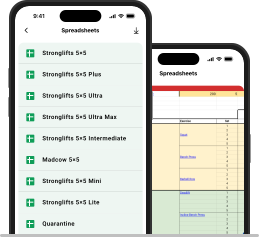
Get The Stronglifts Spreadsheet Bundle
Sign up to get free spreadsheets, 15% off Stronglifts Pro, and daily email tips.
Top/Back-Off Sets vs Straight Sets on Stronglifts 5×5
Best way to improve progress once you’re past the easy beginner gains.
Download the Stronglifts app
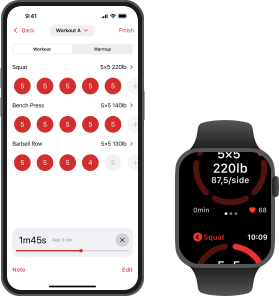
Get your Stronglifts 5×5 workouts, weights, sets and reps planned for you. Focus 100% on lifting while Stronglifts does all the thinking.
Download the Stronglifts app for free.


Beyond Stronglifts 5×5
Continue to make progress after Stronglifts 5×5 by switching to the following workouts variations and intermediate programs.

Upper-body hypertrophy program to focus on chest, shoulders, back, arms and abs.
Hypertrophy
Beginner
Intermediate
Upper body focus
3×/week

Upper/lower body split program with four short workouts per week.
Strength & Size
Beginner
Intermediate
Upper/lower
4×/week

Upper/lower split with five workouts per week and an upper-body focus.
Strength & Size
Intermediate
Upper/lower
5×/week

Best strength and muscle building program for intermediate lifters.
Strength & Size
Intermediate
Full body
3×/week

Classic heavy/light/medium training program for intermediate lifters.
Strength & Size
Intermediate
Full body
3×/week

Low volume strength and muscle building program when time or recovery limited.
Limited Time
Beginner
Intermediate
Full body
2-3×/week

Short maintenance program for busy lifters to maintain strength and muscle gains.
Maintenance
Beginner
Intermediate
Full body
1-3×/week

Hotel gym workout for travelers or new lifters with only access to dumbbells.
Dumbbell-only
Beginner
Intermediate
Full body
3×/week